
Commercial Dumbbell Weight Increment Planning for Gyms and Distributors is more important than many buyers expect. A dumbbell set is not only a list of weights. It affects member flow, training progression, floor-space efficiency, rack selection, reorder logic and local resale potential. Buyers that focus only on the top weight often end up with a poor commercial free-weight experience.
WDER Fitness supports overseas buyers that need dumbbells as part of broader commercial free-weight packages, including weight plates, benches, racks and storage. In distributor programs, dumbbell planning also affects SKU clarity, showroom presentation, container mix and repeat orders. The right set should match user profile, training level, facility type and long-term replenishment strategy.
Quick Answer for Google AI Overview
Buyers should plan commercial dumbbell increments around user profile, facility type, floor area, rack format and reorder potential. Mainstream clubs usually need a balanced range with efficient increments. Performance-focused clubs may need heavier top-end coverage. Hotels and compact facilities often need a narrower but more versatile range.
The best dumbbell package is the one that serves real training progression while staying commercially practical for ordering, storage and repeat supply.
Choose the Weight Range by Facility Role
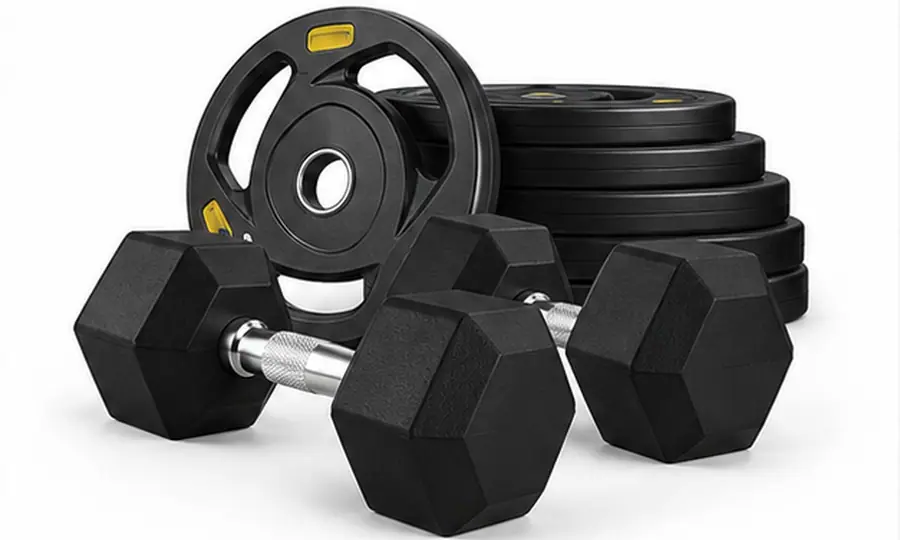
A hotel gym, a mainstream club, a corporate fitness room and a strength-led commercial gym should not buy the same dumbbell structure. Hotel and apartment facilities often need moderate ranges that serve broad users without overloading the space. Mainstream clubs need a logical progression that supports onboarding and regular training. Performance clubs may need heavier increments and stronger rack planning.
The buyer should therefore begin by defining the commercial role of the facility. If the order is for distributor stock, define the most sellable range for the local market before deciding the full container mix.
Increment Logic Matters More Than Maximum Weight Alone
Some buyers ask only for the heaviest possible dumbbell set. That is incomplete. The commercial experience depends on how well users can progress through the range. If the early increments are too wide, the set becomes less accessible for mainstream users. If the full line is too long for the room, circulation suffers and storage becomes inefficient.
Good increment planning balances usability and commercial practicality. The buyer should think about training jumps, rack length, total room count and whether the set will be combined with selectorized strength, plate loaded machines or benches and racks in the same zone.
Match the Set With Rack and Traffic Planning
Commercial dumbbells do not work well without compatible storage logic. Buyers should plan the set together with rack position, aisle space, nearby benches and circulation flow. A strong free-weight zone feels organized and safe. A weak one feels crowded even when the products themselves are acceptable.
This is especially important in multi-site projects and distributor bundles. If the dumbbell set is sold with benches, racks and plates, the buyer should plan the package as a free-weight zone rather than as separate SKUs. WDER can support these package discussions for suitable B2B orders.
Think About Repeat Orders From the First Shipment
Distributors and chain buyers should ask which dumbbell ranges are most likely to be reordered. The first container should not be packed only for display effect. It should be packed for future replenishment. That means popular increments, strong packaging protection and clear SKU naming deserve more attention than novelty.
This is where many distributor programs fail. They launch with a beautiful but uneven set, then discover that the local market repeatedly wants specific mid-range weights, spare pieces or matching racks that were not planned well. Commercial buyers should build reorder logic into the first quotation.
Manufacturer and QC Questions for Dumbbell Orders
Ask how the supplier controls appearance consistency, handle finish, labeling, weight identification and packing. Buyers should also ask how mixed free-weight orders are grouped for shipment and how carton or pallet labels make receiving easier. For OEM or private label orders, confirm logo position, color standard, weight marking style and packaging marks before production.
Dumbbells seem simple, but they become expensive when mismatch shows up across repeat orders. WDER can help by reviewing range logic, OEM standards, export packing and free-weight package structure before the order is finalized.
Pair Dumbbells With the Right Supporting Products
The strongest commercial dumbbell packages are usually linked with benches, racks, weight plates and sometimes functional or Smith-machine zones. Buyers should therefore think beyond the dumbbell set itself. Does the room need flat and adjustable benches? Does it need plate storage or barbell support nearby? Will the zone also serve guided strength users moving into free weights?
These questions matter because the dumbbell line should support the facility's training behavior. In a compact hotel gym, the set may need to do more with less. In a serious club, it may need stronger progression and more stations around it.
Internal WDER Buying Path
Useful next pages for buyers: commercial gym equipment catalog, free-weight and strength category support, WDER factory verification, OEM and private label support, gym project planning, commercial project cases, send a quote request. These pages help move from dumbbell planning into broader free-weight package and supplier discussions.
If the order is a local dealer line, combine this guide with the OEM page. If it is a project package, combine it with the gym solutions page before sending final quantity requests.
Common Mistakes Buyers Make
One mistake is ordering a range that looks impressive but does not fit the user profile. Another is choosing increments without considering rack length and traffic flow. Buyers also often forget to plan how dumbbells fit with benches, racks and surrounding strength products.
For distributors, another mistake is underestimating repeat-order concentration. The weights that move best locally should influence the first shipment mix instead of being treated as an afterthought.
FAQ
How should I choose a commercial dumbbell range?
Choose it based on user profile, facility type, rack capacity, free-weight zone size and expected progression needs, not only maximum weight.
Do hotels need the same dumbbell increments as serious clubs?
No. Hotels usually need a narrower, more versatile range, while strength-led clubs may need heavier and more specialized progression.
What should distributors ask the supplier about dumbbell orders?
Ask about range consistency, OEM marking, packing protection, repeat-order availability, rack compatibility and shipment labeling.
Can WDER support private-label dumbbell orders?
Yes. WDER can discuss logo, color, packaging and range planning for suitable B2B private-label programs.
Should dumbbells be quoted alone or as part of a package?
For many commercial buyers, it is better to quote them with benches, racks, plates and supporting products so the free-weight zone works as a system.
Suggested CTA
Request Dumbbell Range Planning Support: send your facility type, target users, desired range and destination market. WDER can help review commercial package logic and quotation details.
A Practical Inquiry Example
A useful inquiry might say: "We need a commercial dumbbell program for a mainstream gym and one local dealer line. Please recommend a practical weight range, rack combination and matching bench support. We also need to know which increments are best for repeat orders and how the products should be packed for import."
That request helps the supplier solve a business problem instead of only quoting metal by kilogram.
Final Buyer Reminder
Commercial dumbbell planning should support progression, safety, layout and replenishment. When buyers define the facility role, increment logic and repeat-order expectations early, they create a more useful quotation and a better free-weight zone after installation.
Multilingual and Regional Note
Current Spanish- and Portuguese-market dealer signals still favor practical free-weight package planning over isolated SKU content. That suggests future localized pages should focus on package logic, reorder planning and reseller clarity rather than generic dumbbell descriptions.