Introduction
A free weight area is one of the highest-impact zones in a commercial gym. It influences how serious the facility feels, how users move through the room and how safely members can train during busy hours. For importers, distributors and gym project buyers, the free weight area also affects equipment list planning, floor loading, shipping weight, installation preparation and long-term maintenance.
Many buyers focus on strength machines and cardio equipment first, then add dumbbells, benches and racks near the end of the order. In real projects, this can create problems. The gym may receive enough machines but not enough storage. The dumbbell area may look crowded. Benches may block walkways. Weight plates may be left on the floor because storage was not planned. These are small planning issues, but they affect the daily user experience.
This guide explains how to plan a commercial gym free weight area from a buyer's point of view. It covers product selection, spacing, storage, flooring, safety clearance, installation preparation, shipment inspection and supplier questions. The goal is to help gym owners, distributors and project buyers prepare a practical equipment list before requesting a quotation.
Quick Answer: What Should a Commercial Free Weight Area Include?
A commercial free weight area usually includes dumbbells, dumbbell racks, adjustable benches, flat benches, Olympic bars, weight plates, plate trees, squat racks, power racks, storage systems and rubber flooring. The exact mix depends on floor space, target users, training style and budget.
For a small hotel or apartment gym, the free weight area may include one dumbbell rack, a few benches and limited plate storage. For a commercial club, the area should include multiple bench stations, organized dumbbells, plate storage close to racks, clear walkways and enough training clearance for peak hours.
| Area Component | Common Equipment | Buyer Checkpoint |
|---|---|---|
| Dumbbell zone | Dumbbells, 2-tier or 3-tier racks | Weight range, rack stability, spacing |
| Bench zone | Flat, incline, adjustable benches | Pad quality, frame strength, wheels |
| Barbell zone | Olympic bars, plates, collars | Bar quality, plate hole fit, storage |
| Rack zone | Squat racks, power racks, half racks | Height, safety arms, floor fixing |
| Storage | Plate trees, bar holders, accessory racks | Daily organization and user flow |
| Flooring | Rubber tiles or rolls | Shock absorption and noise control |
Define the User Profile First
The free weight area should match the people who will use it. A bodybuilding-focused commercial gym needs a different layout from a hotel gym or school gym. Experienced lifters usually need heavier dumbbells, more benches, enough barbell stations and strong plate storage. General fitness users may need a simpler layout with moderate dumbbell ranges and easy-to-use benches.
Before buying, define:
- Target users: beginners, general members, athletes, bodybuilders or hotel guests
- Expected peak-hour traffic
- Training style: bodybuilding, strength, functional training or general fitness
- Staff supervision level
- Available floor space and ceiling height
- Flooring and noise requirements
- Local installation limitations
This information helps the supplier recommend a practical package. A free weight area that looks impressive in photos may not work if the user profile is wrong. For example, a hotel gym does not need extremely heavy dumbbells, but it does need a clean, quiet and easy-to-maintain layout.
Dumbbells and Dumbbell Racks

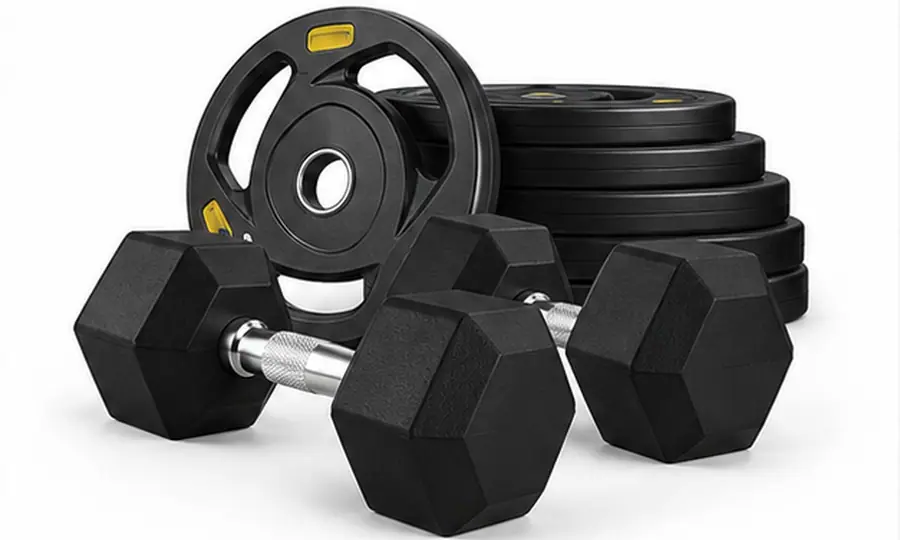
Dumbbells are the center of most free weight zones. Buyers should choose the weight range based on user type and facility size. A small commercial space may use a moderate range, while a serious strength club may need heavier pairs and duplicate popular weights.
Important buying points include:
- Dumbbell type: rubber hex, round rubber, urethane or steel
- Weight range and increment
- Handle diameter and grip texture
- Logo or weight marking clarity
- Rack size and tier layout
- Rack frame stability
- Rubber flooring under the rack
For commercial gyms, dumbbell racks should be strong enough for daily use and easy for members to access. A rack that is too low, too narrow or poorly angled can make the area uncomfortable. During factory inspection or shipment inspection, buyers should check coating, welds, rack feet, dumbbell handles and packing protection.
If the order is for a distributor, confirm whether the dumbbell line can be supplied consistently across repeat orders. Different batches should match in appearance, handle style and marking method.
Benches and Training Clearance
Benches look simple, but they carry heavy daily use. Adjustable benches are especially important because they are moved often and used with dumbbells, racks and cable machines. A good commercial bench should feel stable, adjust smoothly and use durable upholstery.
Check:
- Frame strength and welding
- Pad thickness and firmness
- Backrest and seat adjustment positions
- Wheels and handle for movement
- Foot stability on rubber flooring
- Upholstery stitching and cleaning surface
- Packing protection for pads and frame corners
Spacing matters. Users need room to pick up dumbbells, set up a bench, train safely and return weights. If benches are placed too close to racks or walkways, users may bump into each other during presses, rows or lateral raises. In project planning, leave enough clearance around each bench station, not only around the rack footprint.
Squat Racks, Power Racks and Plate Storage
Racks create the serious strength identity of a gym, but they also require careful planning. A power rack or squat rack needs ceiling clearance, safe lifting space, barbell loading space and plate storage nearby. If plates are stored far away, users will carry heavy plates across the floor and leave them in random places.
For rack areas, review:
- Rack height and room ceiling height
- Upright thickness and hole spacing
- J-hooks and safety arms
- Pull-up bar height
- Plate storage horns
- Barbell storage
- Floor fixing or stability requirement
- Rubber flooring thickness
For commercial projects, plate storage is not optional. Plan plate trees, storage horns or rack-mounted storage for every barbell training zone. Organized storage reduces floor clutter and makes the gym safer during peak hours.
Flooring, Noise and Floor Loading
Free weight areas need suitable flooring. Dropped dumbbells, heavy plates and moving benches can damage weak floors and create noise. Rubber flooring helps with shock absorption, grip and cleaning. The exact thickness depends on the training style and local building conditions.
Buyers should confirm:
- Floor material and levelness
- Rubber flooring thickness
- Noise transfer to lower floors
- Floor loading capacity
- Cleaning and maintenance routine
- Edge finishing around different flooring zones
If the gym is in a hotel, apartment or upper-floor commercial building, noise and vibration should be discussed before installation. A supplier can provide equipment dimensions and weights, but the buyer should confirm building conditions locally.
Installation Preparation and Shipment Inspection
A free weight area includes many parts: dumbbells, plates, bars, racks, bolts, bench pads, storage systems and packaging materials. Installation can become slow if parts are not labeled clearly or if the room is not ready.
Before shipment, request:
- Product photos before packing
- Close-up photos of racks, benches and dumbbells
- Packing list by item
- Carton or crate labels
- Hardware bag photos for racks and benches
- Loading photos for large orders
After delivery, inspect packaging before unpacking. Check whether dumbbell pairs are complete, plates match the order, bench pads are not damaged and rack hardware is present. For a project order, assign one person to compare received items with the packing list.
CTA: Planning a Free Weight Area?
If you are preparing a commercial gym project, dealer showroom or distributor package, send your floor size, target users and preferred product list. WDER can help review dumbbells, racks, benches, plates and storage options for your free weight area.
Suggested button: Send Your Gym Project Requirements
FAQ
How much space does a commercial free weight area need?
It depends on user traffic, equipment mix and training style. The plan should include equipment footprint, safe lifting clearance, walkways and storage space. Do not calculate only the size of racks and benches.
What dumbbell range is best for a commercial gym?
General commercial gyms often need a moderate to heavy dumbbell range. Strength-focused gyms may need heavier pairs and duplicate popular weights. Hotels and apartment gyms can usually use a smaller range.
Are adjustable benches enough for a free weight area?
Adjustable benches are useful, but many commercial gyms also need flat benches and dedicated bench stations. The right mix depends on training flow and peak-hour traffic.
What should I check before buying dumbbell racks?
Check rack stability, tier design, weld quality, frame coating, footprint, dumbbell fit and packaging protection. The rack should allow users to remove and return dumbbells easily.
Why is plate storage important?
Plate storage keeps the area organized, reduces trip hazards and improves user flow. It is especially important near squat racks, benches and plate loaded machines.
Conclusion
A commercial free weight area should be planned as a system, not as separate dumbbells, benches and racks. The best layout matches user profile, training style, storage needs, flooring, safety clearance and installation conditions. For B2B buyers, careful planning also reduces shipment, assembly and after-sales problems.
WDER can support buyers with product selection, free weight area planning, OEM options, packing and shipment preparation for commercial gym projects.
Final CTA
Ready to build a free weight area for a commercial gym, hotel project or distributor showroom? Contact WDER Fitness Equipment with your floor plan, target users and product list to receive model suggestions and quotation support.
Suggested button: Get a Quote