Introduction
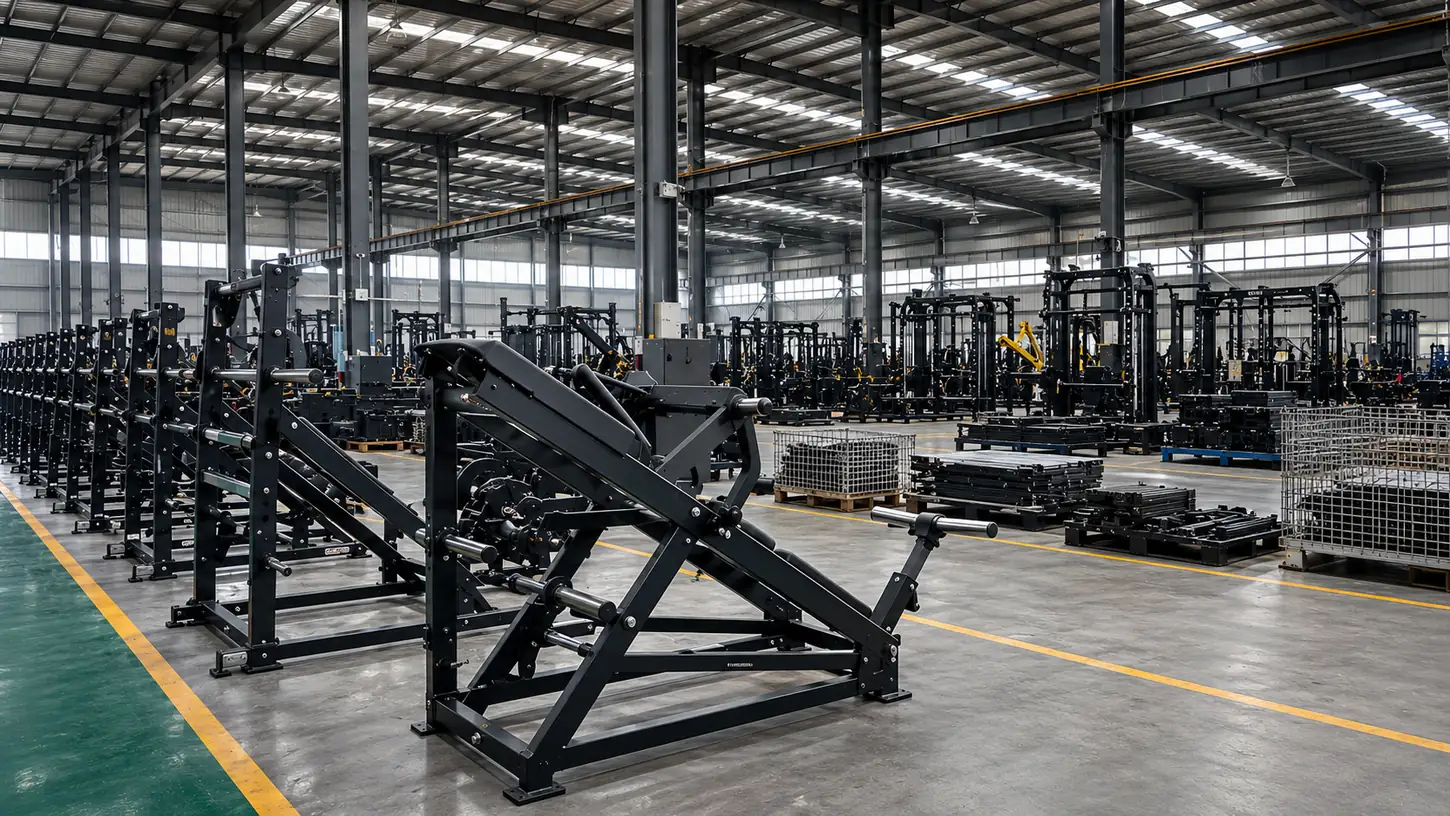
OEM gym equipment can help importers, distributors and fitness brands build a product line with their own appearance, logo and market positioning. But private label production is not only a matter of adding a logo to a strength machine or treadmill. A successful OEM order depends on clear product requirements, realistic customization choices, confirmed specifications, sample or pre-production approval, factory testing, export packaging and shipment inspection.
Many problems in overseas fitness equipment orders start before production begins. A buyer may send a product photo without dimensions, request a custom color without a color code, or approve a logo position without checking the equipment surface. The factory may understand the general idea, but small details such as upholstery color, label size, loading horn finish, instruction sticker language or carton marking can become expensive to correct after production.
This guide explains what overseas buyers should prepare before ordering OEM or private label gym equipment. It is written for B2B buyers who want practical production preparation, not generic branding advice. The examples apply to commercial strength equipment, plate loaded machines, selectorized machines, cardio equipment, free weights and complete gym project packages.
Quick Answer: What Should Buyers Prepare for OEM Gym Equipment?
Before requesting OEM production, prepare your target market, product list, expected quantity, logo files, brand colors, preferred frame and upholstery colors, packaging requirements, destination country, shipping terms and any special product requirements. For project orders, also prepare a floor plan, user profile and installation schedule.
For most private label buyers, the preparation can be divided into seven parts:
| Preparation Area | What to Confirm | Why It Matters |
|---|---|---|
| Buyer role and market | Distributor, gym owner, brand owner, project buyer | Helps supplier recommend suitable models and price level |
| Product list | Categories, model references, quantity | Controls quotation accuracy and production planning |
| Branding files | Logo, colors, labels, manuals | Prevents wrong logo size, position or color |
| Specifications | Dimensions, frame, upholstery, resistance, motor or stack | Confirms product matches customer requirements |
| Approval process | Sample, rendering, photo approval, pre-production check | Reduces mistakes before mass production |
| Packaging | Carton, crate, foam, labels, spare parts | Protects equipment during export shipment |
| Shipment inspection | Photos, videos, packing list, loading check | Reduces installation and receiving problems |
Define Your Buyer Role and Target Market
The first OEM question is not "Can you put my logo on this machine?" The better question is "Who will use and buy this equipment in my market?" A distributor building a dealer catalog has different needs from a single commercial gym owner. A private label brand selling online may care more about carton design and consistent product photos. A hotel gym project buyer may care more about quiet operation, beginner-friendly machines and installation preparation.
When WDER reviews customer requirements, the target market affects model selection. For example, a strength-focused club may prefer plate loaded machines with strong visual impact, while a hotel or apartment gym may prefer selectorized equipment and commercial cardio machines with simple user operation. A distributor may need a balanced product range that includes strength machines, cardio equipment, benches, racks and free weights.
Useful information to send:
- Buyer type: importer, distributor, gym owner, contractor, private label brand
- Destination country and main customer group
- Target price range or market positioning
- Expected order quantity and repeat order plan
- Preferred product categories
- Local safety, labeling or electrical requirements if known
This information helps the supplier avoid recommending products that look attractive in a catalog but do not fit the buyer's actual customers.
Prepare a Practical Product List
An OEM order should start with a clear product list. A simple message such as "Send me price for gym equipment" usually leads to slow communication because the category is too broad. Commercial fitness equipment can include plate loaded machines, selectorized machines, cable systems, treadmills, bikes, ellipticals, benches, racks, dumbbells, plates and accessories.
For a first quotation, prepare a list with:
- Product category
- Model name or reference photo
- Quantity per model
- Preferred color or finish
- Custom logo need
- Destination port or country
- Special application, such as hotel gym, commercial club, school gym or showroom
For strength equipment, confirm whether you need plate loaded or selectorized machines. For cardio equipment, confirm whether the order is for high-traffic commercial use, hotel use or light commercial use. For free weights, confirm weight range, increment, logo style and rack requirements.
If you are building a complete gym, the product list should match the floor plan. A 300 square meter facility needs a different mix from a 1,500 square meter club. Too many large machines can make the room difficult to use, while too few key machines can weaken the training experience.
Logo Files and Brand Materials
Private label production depends on accurate brand files. A screenshot of a logo is not enough for production. The supplier should receive vector files when possible, such as AI, EPS, SVG or PDF. High-resolution PNG can be used in some cases, but it may not be suitable for metal badges, screen printing or large labels.
Prepare:
- Logo file in vector format
- Brand color reference, such as Pantone, RAL or clear CMYK/RGB values
- Preferred logo usage: badge, sticker, upholstery embroidery, tower panel, console label or packaging
- Logo size requirements
- Any brand slogan or warning label language
- Product name or series name if required
The logo position should be checked against the actual equipment surface. A logo that works on a flat shroud may not work on a curved tube or textured upholstery. For strength machines, common positions include tower panels, frame badges, instruction labels, side covers and upholstery. For cardio equipment, common positions include console panels, side covers and frame areas.
Before mass production, ask for a logo mockup or sample photo. This step is simple but important. It gives the buyer a chance to correct scale, color and placement before production continues.
Frame Color, Upholstery and Appearance
Color customization is common in OEM gym equipment, but it should be controlled carefully. Commercial strength equipment usually includes powder-coated steel frames, upholstery pads, plastic covers, rubber parts and small metal components. Not every part can be customized in the same way or at the same cost.
For frame color, buyers should provide a color code or physical sample if brand consistency is important. Photos on a screen can be misleading because lighting and device settings change color perception. For upholstery, confirm material type, color, stitching, foam density and cleaning expectations.
Questions to confirm with the manufacturer:
- Which frame colors are standard and which are custom?
- Is there a MOQ for custom color?
- Will all models in the order use the same color?
- Can upholstery color be matched across different products?
- Are accent parts, covers or labels also customizable?
- How will the factory confirm the color before mass production?
In factory production, color consistency is easier when the buyer selects standard options. Custom colors are possible, but they require extra confirmation and may affect lead time. A practical OEM plan should balance brand appearance with repeatable production.
Technical Specifications Buyers Should Understand
Private label buyers do not need to become engineers, but they should understand the specifications that affect product application. If a distributor sells commercial strength equipment, customers may ask about dimensions, loading capacity, frame material, tube thickness, weight stack, cable system, bearing type, pad material and warranty. If the buyer cannot answer, the product line becomes harder to sell.
For strength equipment, review:
- Overall dimensions and training footprint
- Frame tube specification and finish
- Machine net weight and gross weight
- Maximum loading or weight stack range
- Seat and pad adjustment points
- Handle position and grip material
- Bearing, bushing or pivot system
- Cable and pulley details for selectorized machines
- Plate horn size for plate loaded machines
For cardio equipment, review:
- Motor type and rated power for treadmills
- Running belt size
- Speed and incline range
- Console functions
- User weight recommendation
- Power plug and voltage requirements
- Packing size and assembly process
- Maintenance access
These details support Google SEO and AI search because they answer real buyer questions. More importantly, they reduce misunderstandings before production.
Sample, Pre-Production Approval and Factory Testing
For a first OEM order, a sample or pre-production approval is valuable. A sample is not always required for every buyer, especially for standard products with simple logo application, but it is helpful when the order includes new colors, new labels, custom upholstery, new product combinations or a new private label brand.
A practical approval process may include:
1. Requirement review 2. Model and specification confirmation 3. Logo and color mockup 4. Sample or pre-production photo approval 5. Mass production 6. Factory testing 7. Packing and shipment inspection
Factory testing should check more than appearance. For strength equipment, the factory should check movement smoothness, frame stability, weld finish, pad installation, handle position, fastener condition and coating quality. For selectorized equipment, cable routing, guide rods, weight stack movement and pin operation should also be checked. For cardio equipment, basic power-on testing, belt tracking, console function and noise check are important.
Buyers can request short testing videos for selected products. This is especially useful for first orders, new product series or important project shipments.
Packaging and Export Shipment Preparation
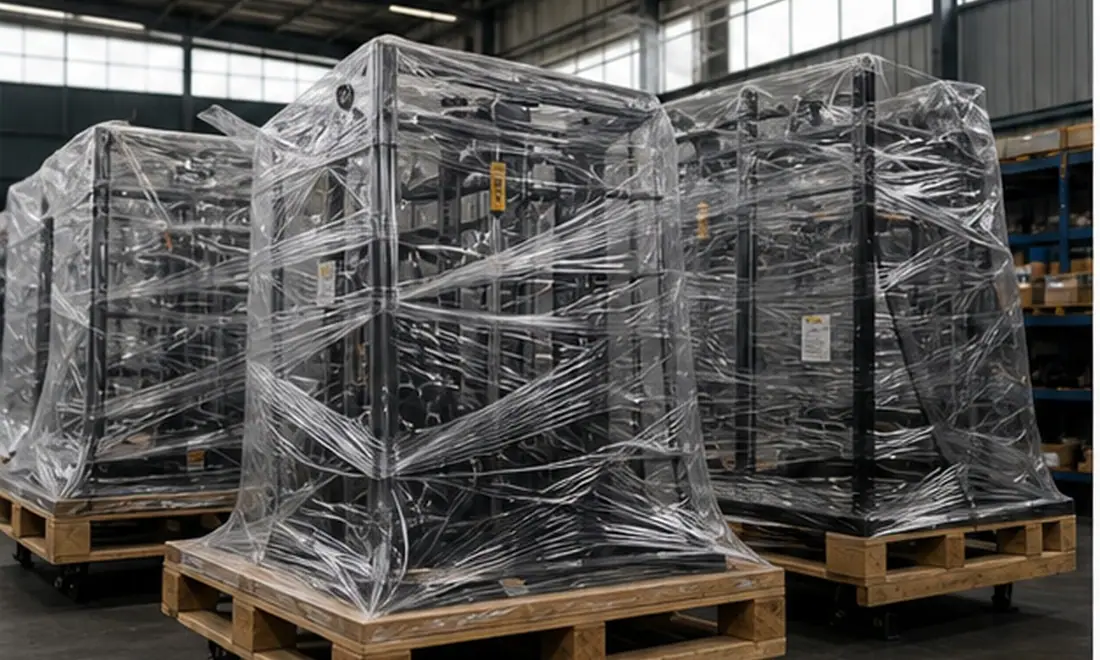
Packaging is part of product quality for overseas orders. A well-made machine can still arrive with scratches, missing bolts or damaged upholstery if packaging is weak. For export gym equipment, packaging should protect painted frames, pads, plastic covers, console parts, cables and small hardware during long-distance transport.
Confirm:
- Packing method: carton, wooden crate, steel frame or mixed protection
- Foam, film and corner protection
- Small parts packing and labeling
- Carton marks or private label shipping marks
- Gross weight and packing dimensions
- Container loading plan for larger orders
- Spare parts included with shipment
For private label buyers, packaging may also include branded carton labels, instruction sheets or product stickers. These details should be confirmed before production because packaging materials may have their own lead time.
Shipment inspection can include product photos, packaging photos, packing list, label photos and container loading photos. This does not replace formal third-party inspection when required, but it helps both buyer and supplier confirm that the shipment matches the agreed requirements.
Common OEM Mistakes to Avoid
The most common OEM mistakes are not dramatic. They are small, preventable gaps in communication.
Avoid these problems:
- Sending low-resolution logo files
- Choosing custom colors without a color code
- Confirming product photos without checking dimensions
- Forgetting destination voltage for cardio equipment
- Ignoring spare parts and maintenance needs
- Approving packaging too late
- Not confirming label language or warning stickers
- Ordering mixed equipment without checking installation sequence
- Comparing supplier prices without checking specifications
Price matters, but specification clarity matters just as much. If two suppliers quote different prices for a similar machine, compare frame, dimensions, weight, weight stack, cable, pads, finish, packing and service scope before deciding.
A Practical Message Template for OEM Inquiries
Many buyers lose time because the first inquiry is too short. A clear message does not need to be perfect, but it should give the manufacturer enough information to make a useful first recommendation. The goal is to avoid several days of basic back-and-forth before model selection even begins.
Here is a practical structure:
"We are a distributor / gym owner / private label brand in [country]. We are preparing an OEM order for [product categories]. Our target customers are [commercial gyms / hotels / dealers / schools]. We need approximately [quantity] units for the first order. Please recommend suitable models for [application]. We need logo application, frame color [color code if available], upholstery color [color], and export packaging for shipment to [port or country]. Please include product dimensions, packing dimensions, MOQ, lead time, customization options, testing process and quotation."
This type of inquiry helps the supplier understand both the product and the business context. It also gives the buyer a better way to compare suppliers because each factory is responding to the same requirements.
If you are not ready to confirm exact quantities, give a realistic range. For example, "first mixed container order" is more useful than "large quantity." If you are comparing products for a future dealer catalog, say that clearly. A good manufacturer can then recommend models that are stable for repeat supply instead of only quoting one-time project items.
How to Compare OEM Quotations Fairly
OEM quotations can be difficult to compare because two machines may look similar in photos but differ in structure, components, packing and service. The lowest unit price may not be the lowest project cost if it leads to repainting issues, missing spare parts, difficult installation or weak packaging.
Compare quotations by checking:
- Product model and specification
- Frame size, net weight and packing size
- Weight stack or plate loading details
- Upholstery and handle material
- Included customization items
- Logo method and setup cost
- Packaging method
- Spare parts and after-sales support
- Lead time and payment terms
- Inspection and testing evidence
For private label buyers, consistency across repeat orders is important. If your first order uses one frame color, pad color and label system, the second order should match. Ask how the factory records approved colors, logo files and product details for repeat production. This kind of documentation is often more valuable than a small price discount.
CTA: Planning a Private Label Gym Equipment Line?
If you are preparing an OEM gym equipment order, send your product list, logo file, target market, quantity and destination country. WDER can help review suitable models, customization options, production details and export packing requirements.
Suggested button: Send Your Brand Requirements
FAQ
What is OEM gym equipment?
OEM gym equipment is fitness equipment manufactured by a factory and customized for a buyer's brand, product line or market requirements. Customization may include logo, color, upholstery, labels, packaging and selected specifications.
What files do I need for private label gym equipment?
Prepare vector logo files, brand color references, product list, quantity, destination country, packaging requirements and any label or manual language requirements. For best results, also send target customer information and market positioning.
Can I customize every part of a strength machine?
Not always. Logo, frame color and upholstery are common customization areas, but some structural parts, plastic covers or moving components may depend on existing molds and production limits. The supplier should confirm what is standard and what requires MOQ or extra lead time.
Should I order a sample before mass production?
A sample is recommended for new private label brands, new colors, custom packaging or first-time cooperation. For standard models with simple logo application, a pre-production photo approval may be enough, depending on order size and buyer risk tolerance.
How can I reduce OEM production mistakes?
Use written specifications, approve mockups, confirm colors with codes, request pre-production photos, check factory testing evidence and review packaging before shipment. Clear communication before production is the best way to reduce mistakes.
Conclusion
OEM gym equipment works best when the buyer prepares clear requirements before production. Logo files, colors, specifications, product application, packaging and shipment inspection should all be confirmed step by step. This process is not only about branding; it protects product consistency, installation efficiency and long-term customer trust.
For importers, distributors and private label brands, a reliable manufacturer should help turn requirements into a practical production plan. The goal is a product line that can be sold, installed, maintained and reordered with fewer surprises.
Final CTA
Ready to build a private label commercial gym equipment line? Contact WDER Fitness Equipment with your product list, logo file, target market and shipment destination to receive model suggestions and OEM quotation support.
Suggested button: Ask for Product Catalog