Introduction
B2B buyers do not search for commercial gym equipment content only for education. They usually need to make a decision: which products fit the project, which supplier can support the order, what details must be confirmed before deposit, and how to reduce problems during production, shipment inspection and installation preparation. This guide is written for bodybuilding gym owners, service teams and distributors supporting plate loaded strength equipment. It uses practical export-order thinking rather than generic fitness advice.
Quick Answer
Plate loaded machine maintenance should focus on loading horns, pivot bearings, frame welds, grip condition, pad security, rubber stops and fastener tightness. In commercial gyms, these checks should be scheduled weekly for high-use machines and documented before parts wear affects user safety or training experience.
Why This Topic Matters for Buyers
Heavy plate loading creates repeated stress on horns, pivots, bolts, pads and frame contact points. In commercial fitness projects, small details can become expensive when they are discovered after production or after goods arrive. A reliable buying process should connect product application, specification confirmation, factory testing, shipment inspection, delivery planning and after-sales support.
Inspect Loading Horns and Plate Contact Areas
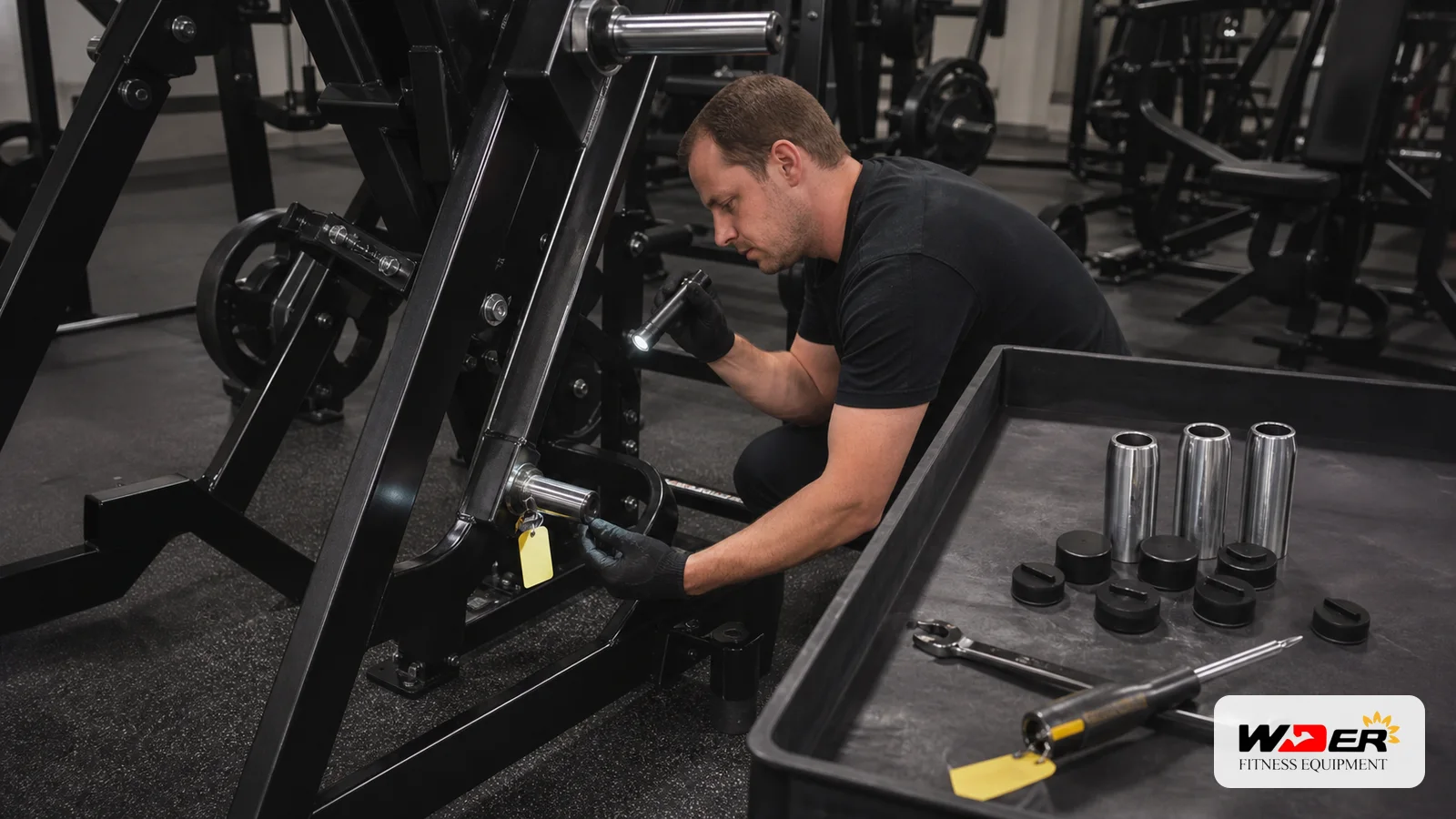
Loading horns receive direct wear from Olympic plates. Check for bending, coating wear, loose sleeves, missing end caps and abnormal noise when plates are loaded. If a machine is used in a high-volume bodybuilding gym, inspect the horn-to-frame weld area carefully. Surface scratches are normal, but movement, cracking or severe deformation should be handled immediately.
Check Pivots, Bearings and Movement Path
Plate loaded machines rely on smooth pivot movement. During maintenance, move each arm through the complete range without plates and then with moderate load. Listen for grinding, scraping, knocking or uneven resistance. Check bearing housings, washers and pivot bolts. Lubrication should follow the supplier recommendation, because excessive oil can attract dust and create a cleaning problem.
Review Grips, Pads and User Contact Parts
Grips and pads are user-facing parts that shape perceived quality. Check grip rotation, rubber wear, end caps, stitching, pad bolts and upholstery condition. Pads should stay firm without rocking. If a pad is damaged, replacement should match the original size and mounting hole layout, not only the color.
Document Fasteners, Frame Finish and Floor Contact
Use a maintenance log for bolt tightening, rubber foot condition, frame scratches and touch-up needs. For machines placed on rubber flooring, check whether the feet remain level. Uneven floor contact can create noise and reduce stability. Distributors should provide spare grip sets, end caps and fastener references for service partners.
Buyer Checklist
- Loading horns and pivot points are high-stress areas on plate loaded machines.
- Commercial gyms should document recurring wear patterns by machine and training zone.
- Pad replacement must match dimensions, mounting points and upholstery specification.
- Ask for clear photos or videos when a specification, test result or packing detail affects the order.
- Keep quotation, invoice, inspection notes and installation requirements in one project file.
- Use internal links and product references so the supplier can respond with a practical quotation instead of a generic catalog.
Mid-Article CTA
If you are preparing a commercial gym equipment order, send WDER your product list, quantity, destination country, required delivery term and customization notes. Our team can review the requirements and help you prepare a practical quotation scope.
Recommended Internal Links for Next Step
- Review WDER's commercial gym equipment supplier options.
- Check factory production and QC capability before confirming a supplier.
- Use gym project planning support if you are planning a full facility.
- send your requirements for quotation support.
FAQ
How often should plate loaded machines be inspected?
High-use commercial gyms should do quick weekly checks and deeper monthly inspections, with immediate action for loose pivots, bent loading horns or unstable frames.
What spare parts are most useful?
Common spare parts include grips, end caps, rubber feet, bolts, washers, bearings, pad sets and touch-up paint.
Can plate loaded machines be repaired on site?
Many contact parts can be replaced on site, but structural issues such as cracks or severe deformation should be reviewed by the supplier or qualified technician.
Conclusion
Plate Loaded Machine Maintenance Checklist is not only a content topic; it is a procurement control point. Buyers who confirm specifications, test requirements, documentation, packing and service expectations early usually get a cleaner order process and fewer surprises after delivery. For overseas B2B projects, the most useful supplier is one that can explain details clearly and support the order from RFQ to after-sales service.
Final CTA
Send your requirements to WDER Fitness with product category, quantity, destination, voltage or customization needs and target delivery time. We can help prepare a quotation, product recommendation and shipment-ready order plan for your market.