Introduction
Plate loaded and selectorized machines are both important in commercial gyms, but they solve different buyer problems. Plate loaded machines use weight plates and are often chosen for serious strength training, bodybuilding zones and visually strong gym floors. Selectorized machines use weight stacks and selector pins, making them easier for beginners, general members and supervised training environments.
The best choice is rarely one or the other. Most successful commercial gyms use a mix. The real question is how much of each type you need based on your members, space, budget, maintenance plan and market positioning. A new gym owner may need more selectorized machines to make training approachable. A distributor may need plate loaded models because they are easier to display and sell as heavy-duty equipment. A hotel gym may need compact selectorized or cable systems. A strength-focused club may need a larger plate loaded area.
This guide compares both machine types from a procurement perspective. If you are building a strength zone, start with the commercial gym equipment catalog, review a detailed product example like the plate loaded row machine, and use this article to decide which package to request from WDER.
What Plate Loaded Machines Do Best
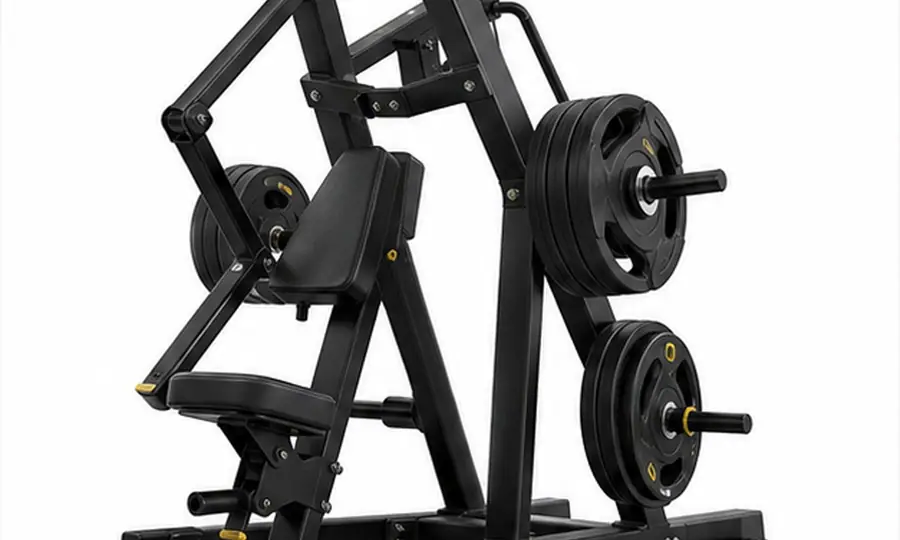
Plate loaded machines are popular because they feel close to free-weight training while still guiding the user's movement. The user loads Olympic weight plates onto horns or sleeves. This gives advanced lifters a familiar training feel and allows gyms to build a serious strength area without relying only on barbells and racks.
The biggest advantage is training feel. Many plate loaded machines use independent arms or converging paths, which can feel more natural for pressing, rowing and pulling. They also have fewer internal weight-stack parts, so maintenance can be simpler when the frame, bearings, bushings and moving arms are built well. For distributors, plate loaded machines often look impressive in photos and showrooms because the frame structure is visible and the training purpose is easy to understand.
However, plate loaded machines are not automatically better. They require users to handle plates, which may not suit beginners, older members or hotel gym guests. They also need enough storage nearby. If the gym has many plate loaded machines but poor plate storage, the floor quickly becomes messy. Buyers should plan plate trees, traffic space and member safety before ordering a full plate loaded package.
What Selectorized Machines Do Best
Selectorized machines are usually easier for general members. The user changes resistance by moving a pin in the weight stack. This is convenient, fast and less intimidating for beginners. For commercial gyms with many new members, selectorized machines help coaches teach movements quickly and reduce confusion.
Selectorized equipment is often used for circuit training, women-focused clubs, hotels, apartments, corporate gyms, schools and general fitness centers. The guided movement path helps users train safely with less setup time. In a busy gym, this matters because members do not need to carry plates across the floor or wait for others to unload machines.
The buyer must still check quality carefully. Weight stacks, cables, pulleys, guide rods, bearings, upholstery and adjustment points all affect long-term use. A low-quality selectorized machine may look fine in a photo but create noise, cable wear, pin problems or uneven movement after months of commercial use. Before ordering, ask the supplier about cable routing, pulley quality, stack movement, spare parts and testing.
Compare by Member Type
Member profile should guide the equipment mix. If your gym targets beginners, general fitness users, hotel guests or corporate staff, selectorized machines should usually take a larger share. They are easy to understand, fast to adjust and comfortable for supervised or unsupervised training.
If your gym targets bodybuilders, athletes, strength-focused members or serious lifters, plate loaded machines become more important. These users often prefer heavier loading, direct resistance and stronger machine presence. Plate loaded equipment can help the gym look professional to advanced members and coaches.
For a mixed commercial fitness club, a practical starting point is a balanced strength package: selectorized machines for the core beginner-friendly movements, plate loaded machines for high-value strength movements, benches and racks for free weights, and cable stations for versatile training. WDER's gym solutions page can help buyers connect this logic to floor size and project type.
Compare by Floor Space and Layout
Plate loaded machines often need more working space than buyers expect. Users need room to load and unload plates, walk around the machine and access storage. Some machines also have larger movement arcs. Selectorized machines may be easier to organize in rows or circuits because the weight is built into the machine.
A small gym does not need to avoid plate loaded machines, but it should choose them carefully. One or two compact plate loaded units can improve training value. Too many large units may reduce walkways and create clutter. For a hotel gym or apartment gym, selectorized, cable and functional machines may be better unless the user base expects heavy strength training.
Before confirming an order, check the machine dimensions, user movement clearance, service access and delivery route. Ask the supplier to help review the layout if the project has columns, low ceiling, narrow doors or limited unloading access. The applications page is useful for matching product categories to different facility types.
Compare by Maintenance and Spare Parts
Plate loaded machines usually have fewer cable and stack parts, but they still need maintenance. Bearings, pivot points, handles, bolts, pads and loading horns should be inspected regularly. Selectorized machines need more attention to cables, pulleys, guide rods, pins and weight stacks. Neither type is maintenance-free.
For overseas buyers, spare parts planning matters. Ask the manufacturer which parts are commonly replaced, whether spare cables or pads can be included, and how replacement parts are identified. A distributor should also think about after-sales service for local customers. If the product line is difficult to maintain, it may create more service work after sales.
The commercial strength equipment maintenance guide gives a practical checklist for cables, pads, bolts, bearings and spare parts. Use it before ordering a large strength package.
Supplier Checks Before Ordering Strength Machines
When comparing manufacturers, look beyond catalog photos. Ask for frame material, tube size, weld quality, powder coating process, upholstery quality, handle finish, loading horn details, weight stack construction, and quality control process. The WDER factory tour shows manufacturing and inspection steps that overseas buyers should ask about before placing orders.
If OEM is important, confirm logo placement, frame color, upholstery color, handle or accent options and packaging before production. WDER supports OEM and private label gym equipment for distributors, dealers and brands that need consistent product appearance. Do not wait until after production to decide logo and color details.
For export orders, ask about packing. Strength machines may ship partially assembled or disassembled depending on model and container planning. Buyers should confirm packing marks, hardware packages, assembly references and container loading photos. This is especially important if the order includes a mix of plate loaded, selectorized, cardio and free-weight products.
Which Is Better for Commercial Gyms?
For most commercial gyms, the best answer is a planned mix. Selectorized machines are better for beginner-friendly, general member and high-traffic guided training. Plate loaded machines are better for advanced strength training, serious lifting zones and visually strong gym positioning. Free weights, racks and functional trainers complete the package.
A useful rule is to decide the gym's member promise. If the gym promises comfort, accessibility and safe general training, use more selectorized machines. If it promises strength performance and serious training, use more plate loaded machines. If it wants broad market appeal, use both in clear zones.
The final decision should also consider price, maintenance, shipment volume, available plates, local user preferences and installation conditions. If you are not sure, send your gym size, target users and budget to WDER through the contact page. The team can suggest a practical product mix instead of forcing one category.
Practical Buying Checklist
Before confirming a strength machine order, prepare a short checklist that both your team and the factory can understand. List the gym size, expected member type, target training zones, preferred equipment style, destination country, voltage requirements for any cardio products in the same order, and whether the strength equipment needs custom color or logo. For each machine, check the training purpose, dimensions, user clearance, frame finish, handle style, loading method and packing method.
For plate loaded machines, confirm loading horn diameter, plate storage plan, movement path, seat or pad adjustment and the maximum practical loading weight. For selectorized machines, confirm weight stack range, cable specification, pulley movement, pin quality, stack guard design and spare cable availability. If the supplier cannot answer these questions clearly, the buyer should slow down and request more information before paying a deposit.
Distributors should also think about repeat sales. A machine that looks attractive in a showroom is useful only if local gyms can install it, maintain it and reorder matching models later. Ask the factory whether the product line can stay consistent across future orders, especially if your market uses private-label colors or branded labels.
FAQ
Are plate loaded machines cheaper than selectorized machines?
Not always. Plate loaded machines may have fewer weight-stack parts, but price depends on frame design, materials, finish, size, packaging and order quantity. Compare total project cost, not only unit price.
Are selectorized machines safer for beginners?
Selectorized machines are usually easier for beginners because resistance is adjusted with a pin and the movement path is guided. Proper instruction and machine spacing are still important.
Which machines are better for distributors?
Distributors often carry both. Plate loaded machines show strength and durability, while selectorized machines serve broader gym projects. The best dealer line depends on local demand.
Can plate loaded and selectorized machines share the same gym area?
They can be near each other, but clear zoning is better. Keep plate storage close to plate loaded machines and make selectorized circuits easy for beginners to follow.
Can WDER customize both machine types?
Yes. Many WDER strength products can support custom logo, frame color, upholstery color and packaging options depending on order quantity and product series.
Suggested CTA
Need help choosing a strength equipment package? Send your floor size, user profile, product list and destination country through the WDER inquiry form. WDER can recommend a practical mix of plate loaded, selectorized, benches, racks and free-weight equipment.
Schema Markup Suggestion
Use Article schema, FAQPage schema and BreadcrumbList schema. Link to the plate loaded product page, products catalog, OEM page, factory page and contact page.