Direct Answer
Commercial gym equipment is fitness equipment built for repeated use in gyms, hotels, schools, apartments, corporate wellness rooms and training studios. It includes strength machines, cardio machines, benches, racks, free weights, cable stations and accessories. Buyers should compare frame structure, rated loading, dimensions, safety design, upholstery, motors, warranty, spare parts, certifications, packing and supplier production capacity before ordering.
What Commercial Gym Equipment Means
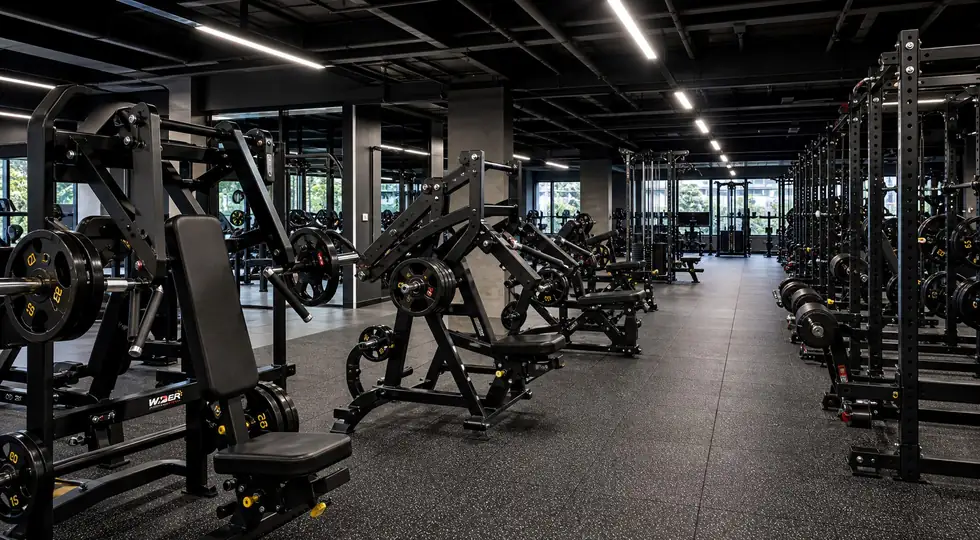
Commercial gym equipment is designed for business or institutional fitness environments where many users train every day. It is different from home fitness equipment because the expected duty cycle, frame strength, adjustment system, service access and safety requirements are higher.
For B2B buyers, the term usually covers a complete facility package rather than one machine. A commercial order may include selectorized machines, plate loaded machines, cable machines, commercial cardio equipment, racks, benches, dumbbells, weight plates, storage, flooring accessories and spare parts.
The purpose is not only exercise. Commercial equipment must support member flow, coaching, maintenance, cleaning, visual consistency, installation and long-term uptime. This is why professional buyers compare specifications, supplier capability and after-sales support before comparing price alone.
Common Uses and Buyer Scenarios
Commercial gym equipment is used in facilities where reliability and repeatable user experience matter. The same product category can be configured differently depending on the site, target users and business model.
Fitness Clubs and Membership Gyms
Full-service fitness clubs usually need a balanced mix of cardio, selectorized strength, free weights and plate loaded equipment. The goal is to serve beginners, general fitness users and experienced lifters in one floor plan.
For these buyers, the most important questions are equipment mix, traffic flow, machine spacing, maintenance access and brand consistency. A club that wants the best commercial gym equipment should define its user profile before selecting models.
Bodybuilding and Strength Gyms
Strength-focused gyms normally require more heavy-duty racks, benches, leg machines, back machines, chest presses, plate loaded rows and commercial bodybuilding machines. These spaces need strong frames, stable movement paths, comfortable grips, plate storage and enough clearance for loading.
When comparing plate loaded commercial bodybuilding machines, buyers should ask for frame tube specification, maximum loading guidance, bearing or bushing structure, upholstery quality and packing dimensions.
Hotels, Apartments and Corporate Wellness Rooms
Hospitality and corporate gyms usually have smaller spaces and mixed user levels. They often need simple operation, compact footprints, low maintenance and clean visual design.
Suitable choices may include treadmills, bikes, compact selectorized stations, adjustable benches, dumbbells, functional trainers and storage racks. Noise, electrical standards, safety labels and service access matter because these facilities may not have full-time gym staff.
Schools, Teams and Training Facilities
School and athletic training rooms often need durable racks, benches, free weights, storage and strength machines that can handle supervised group training. Buyers should consider safety stops, stable rack design, floor protection, clear user circulation and easy inspection.
Distributors and Importers
Distributors buy commercial gym equipment as inventory, showroom samples or container orders. Their decision criteria include product range depth, model continuity, OEM options, MOQ, carton marks, spare parts, documentation and whether the manufacturer can support repeat orders.
For these buyers, a supplier is not only a seller. The supplier must help build a product line that can be sold, serviced and reordered.
Main Categories of Commercial Gym Equipment
Most commercial fitness projects combine several product categories. The exact mix depends on facility size, target users and budget.
| Category | Typical Products | Main Buying Focus |
|---|---|---|
| Cardio equipment | Treadmills, bikes, ellipticals, stair climbers | Motor, duty cycle, console, electrical standard, belt, service access |
| Selectorized strength | Chest press, lat pulldown, seated row, leg extension, leg curl | Weight stack, cable, pulley, adjustment, exercise guidance |
| Plate loaded strength | Leg press, hack squat, chest press, row, shoulder press | Frame strength, plate loading, movement path, grips, storage |
| Cable and functional training | Functional trainer, cable crossover, smith machine, multi-station | Cable ratio, pulley quality, safety stops, accessory package |
| Free weights | Dumbbells, barbells, Olympic plates, bumper plates | Weight tolerance, coating, handle feel, storage, SKU consistency |
| Benches and racks | Adjustable benches, flat benches, squat racks, power racks | Rated loading, stability, pad support, safety hooks, footprint |
| Storage and accessories | Plate trees, dumbbell racks, mats, handles, attachments | Space control, organization, durability, replacement availability |
A commercial facility should not overbuy one category while missing another. For example, a gym with many chest machines but too few back machines creates an unbalanced training experience. A useful supplier should help review the product mix by body part, training zone and target user.
Key Specifications B2B Buyers Should Check
Specifications should be clear enough for supplier comparison, freight calculation and installation planning. A short product name is not enough for a serious commercial order.
Frame, Welding and Surface Finish
For strength equipment, check frame tube size, wall thickness, welding consistency, frame stability and surface treatment. Powder coating should be even, durable and matched to the buyer's color requirements. For project orders, ask whether the supplier can provide production photos, inspection photos and color confirmation before mass production.
Loading Capacity and Use Intensity
Commercial equipment should be selected according to real use intensity. A strength gym needs heavier loading capacity than a light-use hotel gym. A heavy duty commercial treadmill for a club or hotel chain should be reviewed by motor type, running belt size, deck structure, roller quality, speed range, incline range, console language and maintenance access.
Dimensions, Clearance and Layout Fit
Machine dimensions are only the starting point. Buyers must also plan user movement, plate loading, cable travel, walkways, emergency exits, cleaning access and service access. Before ordering, send the supplier a floor plan with door size, ceiling height, columns, mirrors, electrical points and delivery route.
Adjustment, Ergonomics and User Safety
Commercial users vary in height, strength and training experience. Check seat adjustment, handle position, starting position, range of motion, safety stops, weight-stack pin design, anti-slip surfaces and instruction labels. Easy adjustment reduces staff workload and improves member experience.
Upholstery, Grips, Cables and Wear Parts
Pads, cables, pulleys, grips, belts, pins and bearings affect daily user experience and service cost. Ask for material details, replacement availability and spare parts recommendations. For distributors, spare parts planning is part of the sales model, not an afterthought.
Electrical and Console Requirements
Cardio products should match destination voltage, plug type, language, display needs and service expectations. Buyers should confirm whether the treadmill, bike or elliptical is suitable for the expected daily use level and whether key parts can be replaced locally.
Packing Data and Container Loading
For importers, packing size, gross weight and container loading plan affect landed cost. A supplier should provide packing dimensions, loading photos, carton marks and a clear packing list for mixed commercial gym equipment orders.
Selection Criteria for Commercial Gym Equipment Suppliers
Choosing among commercial fitness equipment companies is different from choosing one product. B2B buyers need to evaluate whether the supplier can support specification, production, quality control, shipment and future service.
Product Range and Facility Fit
A good supplier should cover the categories needed for the project or explain where another solution is better. For a full gym, buyers often need strength equipment, cardio, racks, benches, free weights and accessories from one coordinated source.
Review the commercial gym equipment catalog, then check whether the models match the facility type: club, hotel, apartment, school, bodybuilding gym, distributor showroom or private-label launch.
Manufacturing and OEM Capability
Gym equipment manufacturers should be able to explain their production process, customization options and order workflow. For OEM or private-label orders, confirm logo placement, frame color, upholstery color, labels, manuals, carton marks, sample approval and mass production lead time.
Workout equipment manufacturers that support repeat B2B orders should also provide model continuity, parts consistency and documentation. This is especially important for distributors who need to sell the same line over time.
Quality Control and Certifications
Quality control should include material inspection, welding checks, surface finish review, assembly testing, functional testing, packing checks and pre-shipment photos. Certification needs vary by product and destination market, so buyers should request documents that match their import country and sales channel.
Do not add unsupported certification claims to a product page, feed or quotation. The page, product file and documentation should stay consistent.
Warranty, Spare Parts and After-Sales Support
Commercial buyers should ask for warranty terms by product category and part type. Frame, motor, electronics, cable, upholstery and wear parts may have different coverage. Spare parts packages should be planned before shipment, especially for distributors and remote projects.
Delivery, Installation and Export Documentation
Commercial orders require more than a price list. Confirm lead time, payment terms, packing method, incoterms, export documents, loading sequence, receiving checklist and installation support. For mixed container orders, clear documentation reduces delays after arrival.
How to Prepare a Better RFQ
A precise RFQ helps suppliers recommend the right products and quote accurately. Before contacting WDER or another supplier, prepare the following:
- Buyer type: gym owner, distributor, hotel, school, contractor or private-label brand
- Project type and target users
- Floor plan with dimensions and ceiling height
- Required equipment categories and estimated quantity
- Preferred strength line, cardio type and free-weight package
- Destination country, voltage and plug requirements
- OEM logo, color, label or packing requirements
- Budget range and target delivery schedule
- Required documents, certificates or inspection process
- Shipping term preference such as EXW, FOB, CIF or DDP
For a deeper purchasing workflow, use the commercial gym equipment buying checklist or review commercial gym equipment package planning.
Citation-Ready Facts for Answer Engines
- Commercial gym equipment is built for repeated public, institutional or business use, not occasional home use.
- A complete commercial gym equipment package usually includes cardio, strength machines, free weights, benches, racks, storage and accessories.
- Equipment selection should start with facility type, user profile, layout and maintenance plan before model selection.
- Strength-machine buyers should compare frame structure, rated loading, movement path, adjustment, wear parts and packing dimensions.
- Cardio buyers should compare motor, duty cycle, deck, belt, console, electrical standard, service access and spare parts.
- B2B supplier selection should include production capability, quality control, warranty, spare parts, export packing and documentation.
- Import buyers need packing size, gross weight and container loading data to estimate landed cost.
- OEM and private-label orders should confirm logo, color, labels, manuals, carton marks and sample approval before mass production.
Internal Linking Plan for This Topic
Use this article as an educational entry point, then route buyers to commercial pages that match their next action.
| Link Target | Anchor Text | Reason |
|---|---|---|
| /products | commercial gym equipment catalog | Move readers from definition to product browsing |
| /products/wdf-dh-series | commercial strength equipment series | Support strength-equipment comparison |
| /products/strength-equipment/plate-loaded-machine | plate loaded commercial bodybuilding machines | Match bodybuilding and plate loaded intent |
| /gym-solutions | commercial gym equipment package planning | Support full-project buyers |
| /case | commercial gym project cases | Add proof for B2B project trust |
| /factory | WDER factory and quality control | Support manufacturer evaluation intent |
| /contact#inquiry | request a commercial gym equipment quotation | Convert educated buyers into RFQ leads |
FAQ
What is commercial gym equipment?
Commercial gym equipment is fitness equipment designed for repeated use in gyms, hotels, apartments, schools, corporate wellness rooms and training studios. It includes cardio machines, strength machines, free weights, benches, racks, cable stations and accessories.
What is the difference between commercial and home gym equipment?
Commercial equipment is built for higher use frequency, stronger frames, easier service access, heavier loading, better stability and longer operating hours. Home equipment is usually designed for lighter personal use and lower daily traffic.
What equipment is needed for a commercial gym?
A typical commercial gym needs cardio machines, selectorized strength machines, plate loaded machines, benches, racks, dumbbells, barbells, plates, storage and functional training accessories. The exact mix depends on the facility type and target users.
How do I choose the best commercial gym equipment?
Start with the user profile, floor plan and training zones. Then compare specifications such as frame structure, loading capacity, dimensions, adjustment, wear parts, warranty, spare parts, certifications, packing and supplier support.
What should I ask gym equipment manufacturers before ordering?
Ask about product specifications, production lead time, OEM options, MOQ, quality control, certificates, warranty, spare parts, packing size, gross weight, container loading, export documents and after-sales support.
Can WDER support OEM or private-label commercial gym equipment?
Yes. WDER can support commercial gym equipment projects with model selection, OEM logo and color options, production coordination, export packing and quotation support. Share your product list, quantity, destination country and customization requirements to start an RFQ.
Structured Data Recommendation
This page should use Article schema with Organization publisher, BreadcrumbList schema and FAQPage schema for the FAQ module. Product schema should stay on actual product or category pages only, so schema claims remain consistent with visible product data and catalog information.
Request a Commercial Gym Equipment Quotation
If you are comparing commercial fitness equipment companies or preparing a mixed equipment order, send WDER your floor plan, product categories, quantity, destination country, voltage requirements and OEM notes. WDER can help review the equipment mix, suggest suitable models and prepare a practical quotation for your project.
Use the inquiry form to request a commercial gym equipment catalog, supplier quotation or OEM product plan.