
Commercial Gym Equipment Buying Guides
Practical global resources for importers, distributors, gym owners and private-label brands comparing equipment, suppliers, OEM options, installation preparation and shipment requirements.
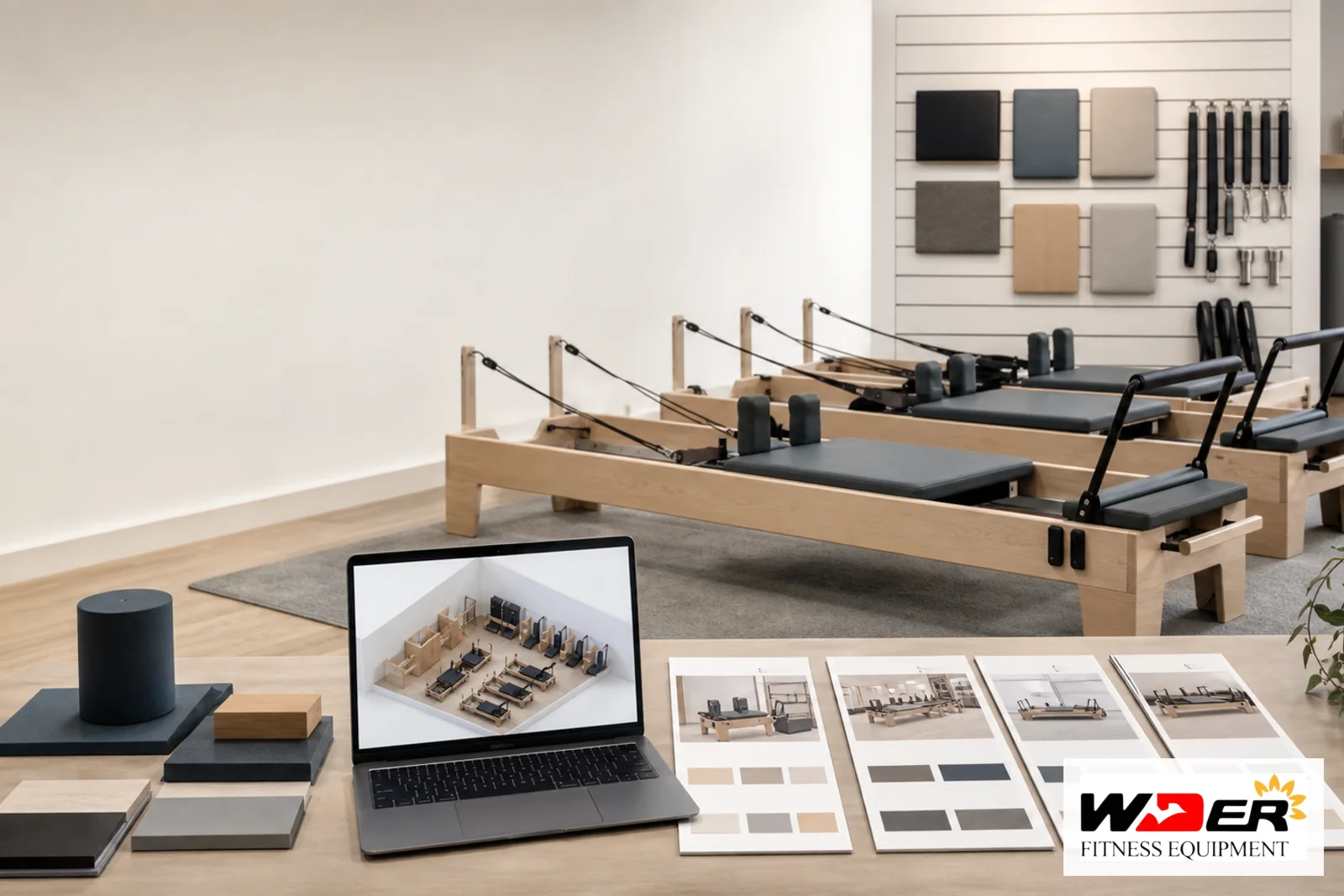
Commercial Gym Equipment Upholstery, Foam and Stitching Guide
Commercial gym upholstery should be evaluated as a system: foam support, pad shape, cover material, tension, seam location, backing plate and attachment method. Density alone does not prove comfort or durability. Buyers should approve a physical or photographed sample, inspect wrinkles and stitching after assembly, confirm cleaning compatibility and keep replacement-pad references for future after-sales support.
Read Guide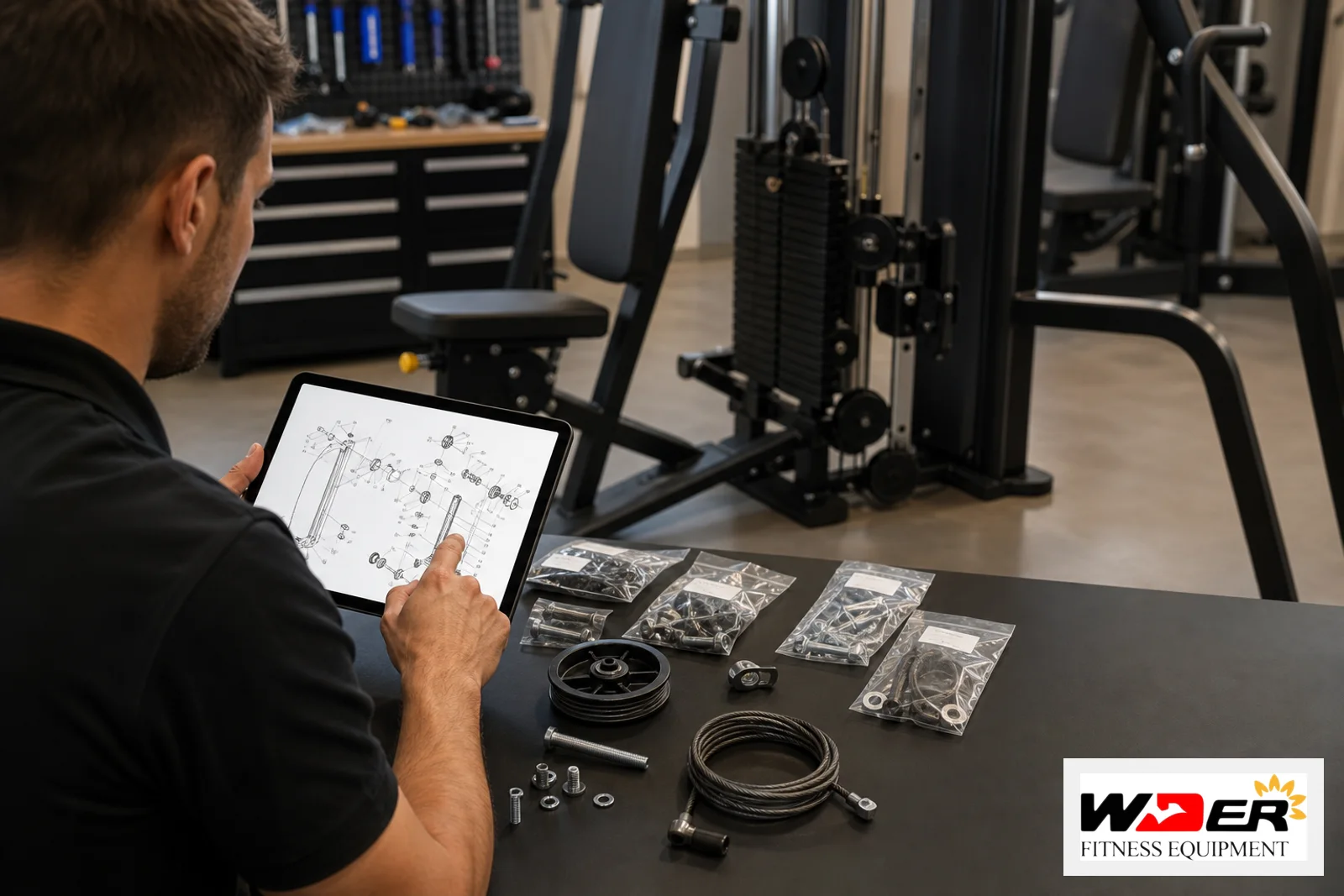
Selectorized Strength Machine Cable Ratio Guide for Buyers
Cable ratio affects how far the cable moves and how much resistance reaches the user relative to the selected stack weight. A displayed plate value is therefore not always the same as handle resistance. Buyers should compare pulley geometry, movement range, increment size and labeling on the exact model, then request a functional test video instead of assuming every machine uses a one-to-one ratio.
Read Guide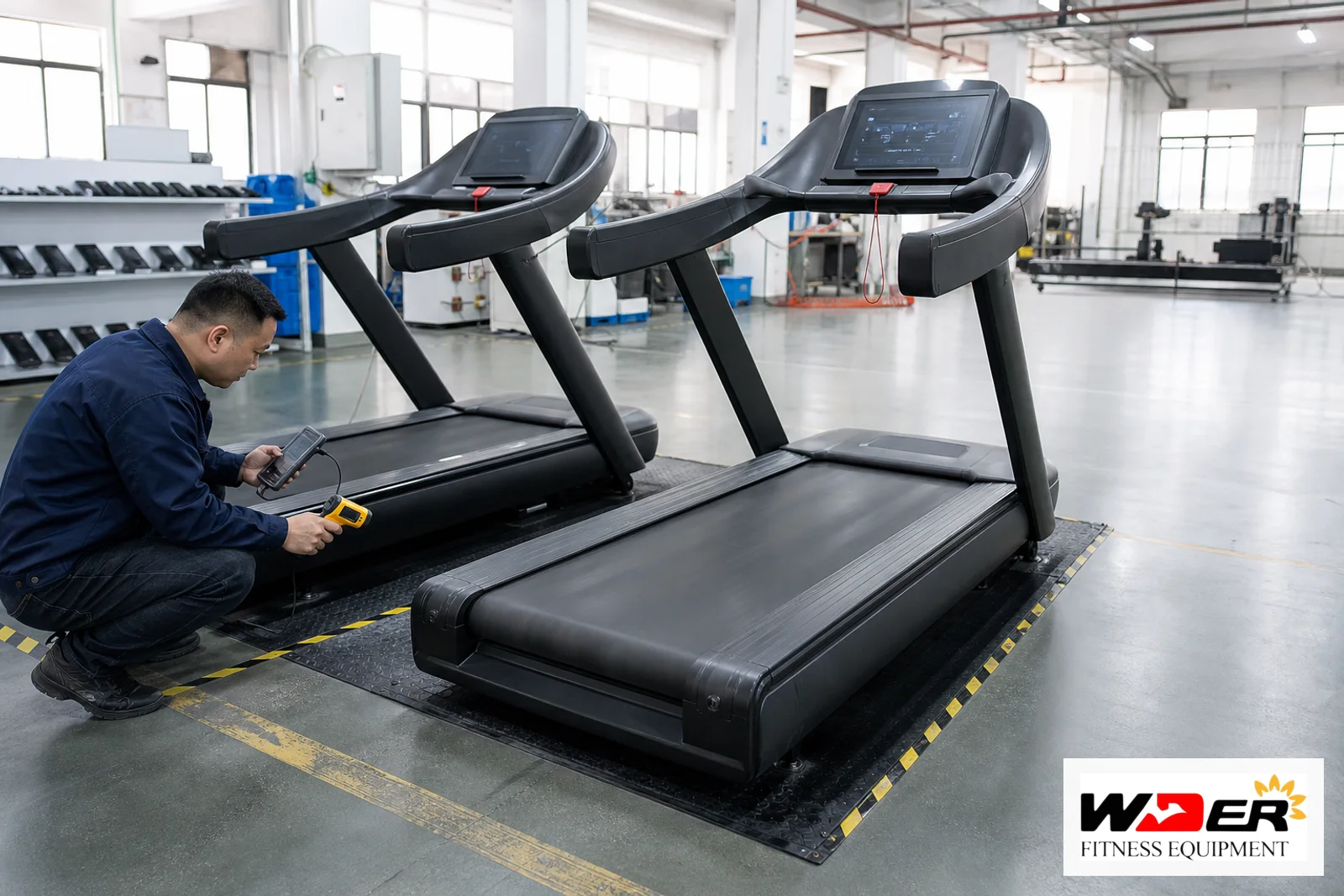
Commercial Treadmill Duty Cycle and Endurance Testing Guide
Commercial treadmill duty cycle describes the operating pattern a treadmill is expected to sustain, including daily hours, peak traffic, repeated starts and user profiles. Buyers should not judge it from motor labels alone. Ask the supplier to match the model to the facility, voltage and expected use, then document factory checks for belt tracking, heat, noise, console stability and emergency-stop operation.
Read Guide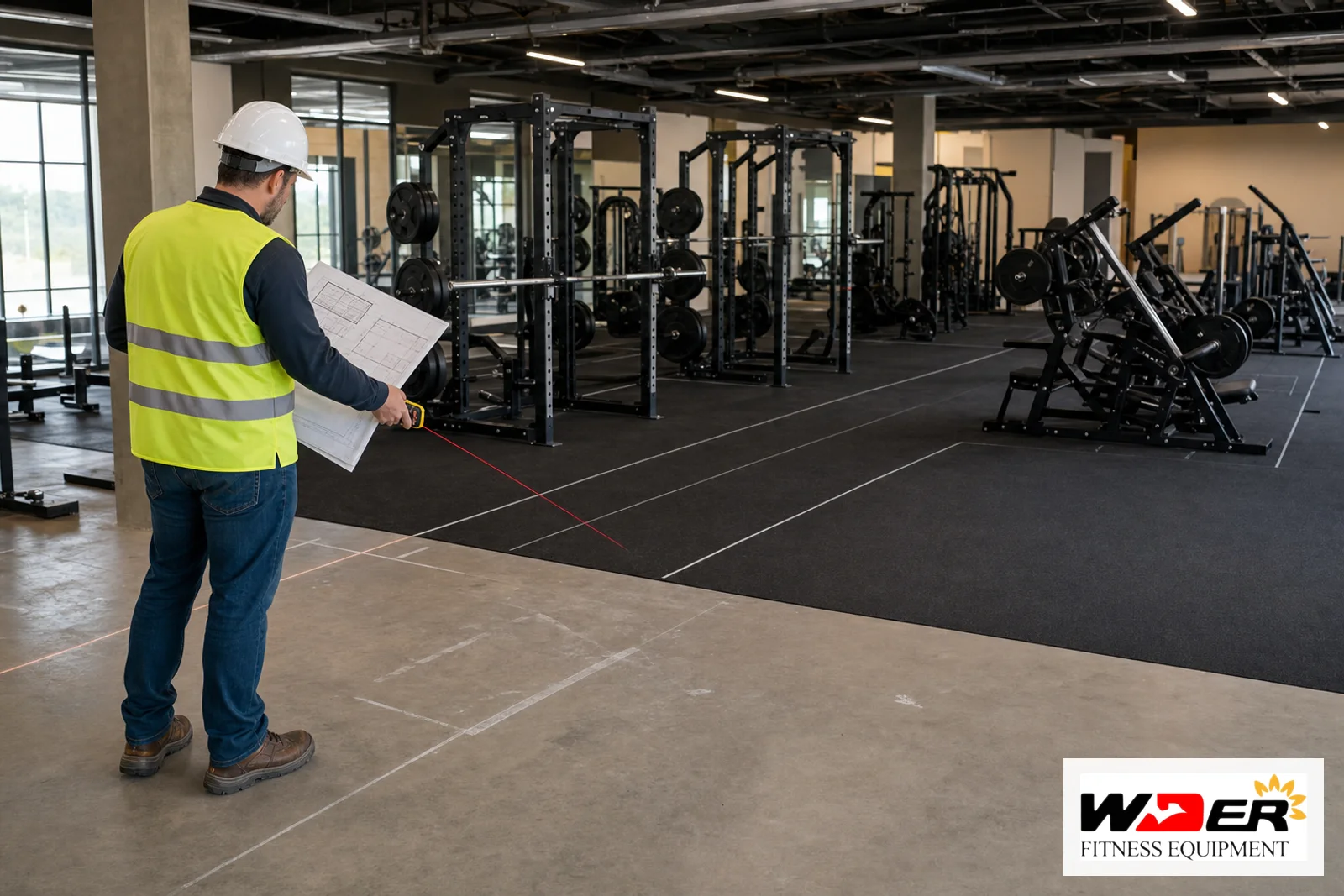
Commercial Gym Equipment Floor Load and Structural Planning Guide
Commercial gym floor-load planning should combine each machine's footprint and operating load with user movement, free-weight impact zones, storage concentration and the building's verified structural capacity. Buyers should send the layout and equipment list to the project engineer before installation. Do not rely on a generic kilograms-per-square-meter figure without checking slab type, load distribution and local code requirements.
Read Guide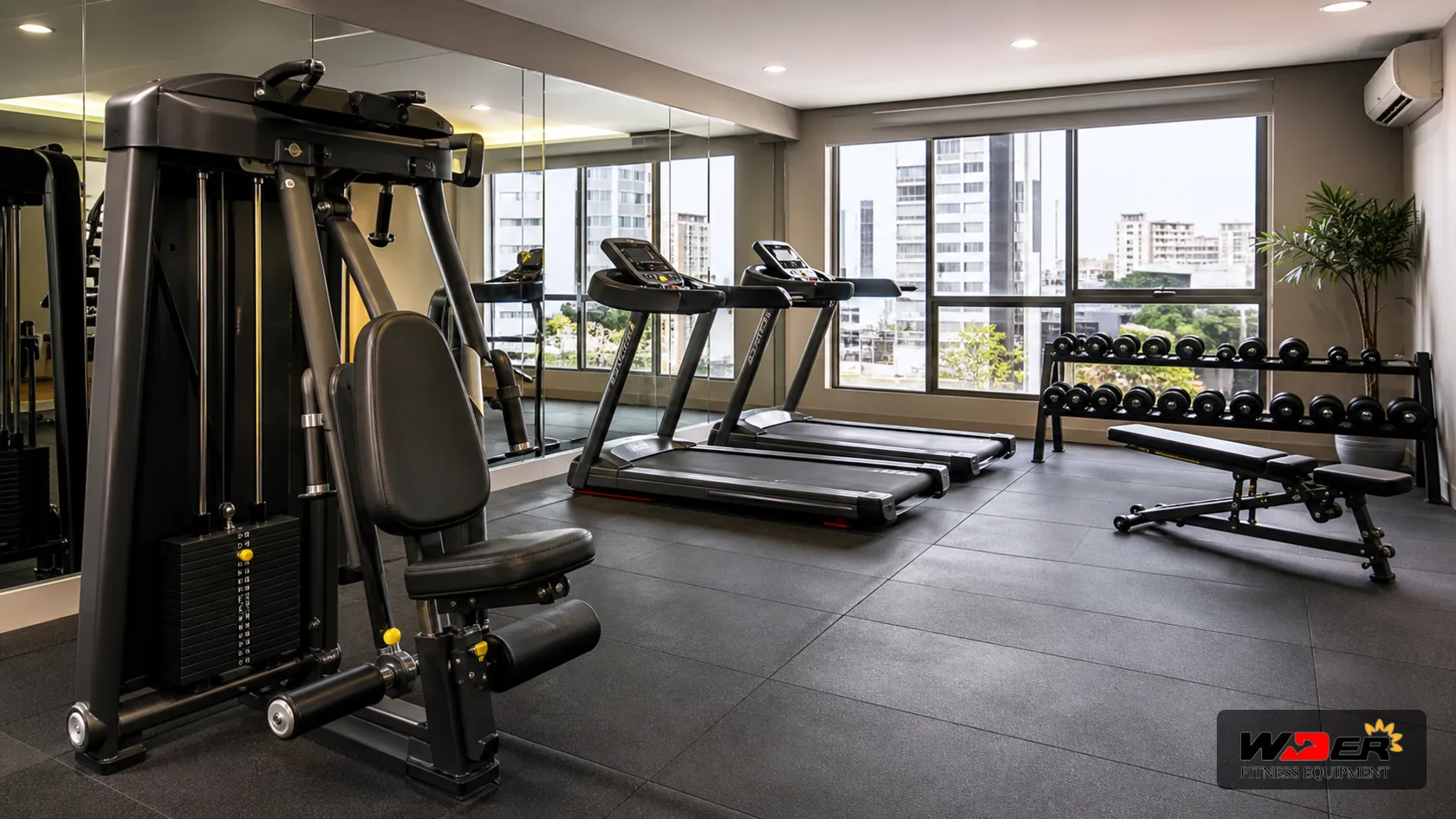
Low-Maintenance Commercial Gym Equipment for Property Projects
Property projects should choose low-maintenance commercial gym equipment with simple operation, durable frames, easy-clean upholstery, stable cardio specifications, clear safety use and common spare parts. The best package depends on room size, user profile, service staff and expected daily traffic.
Read Guide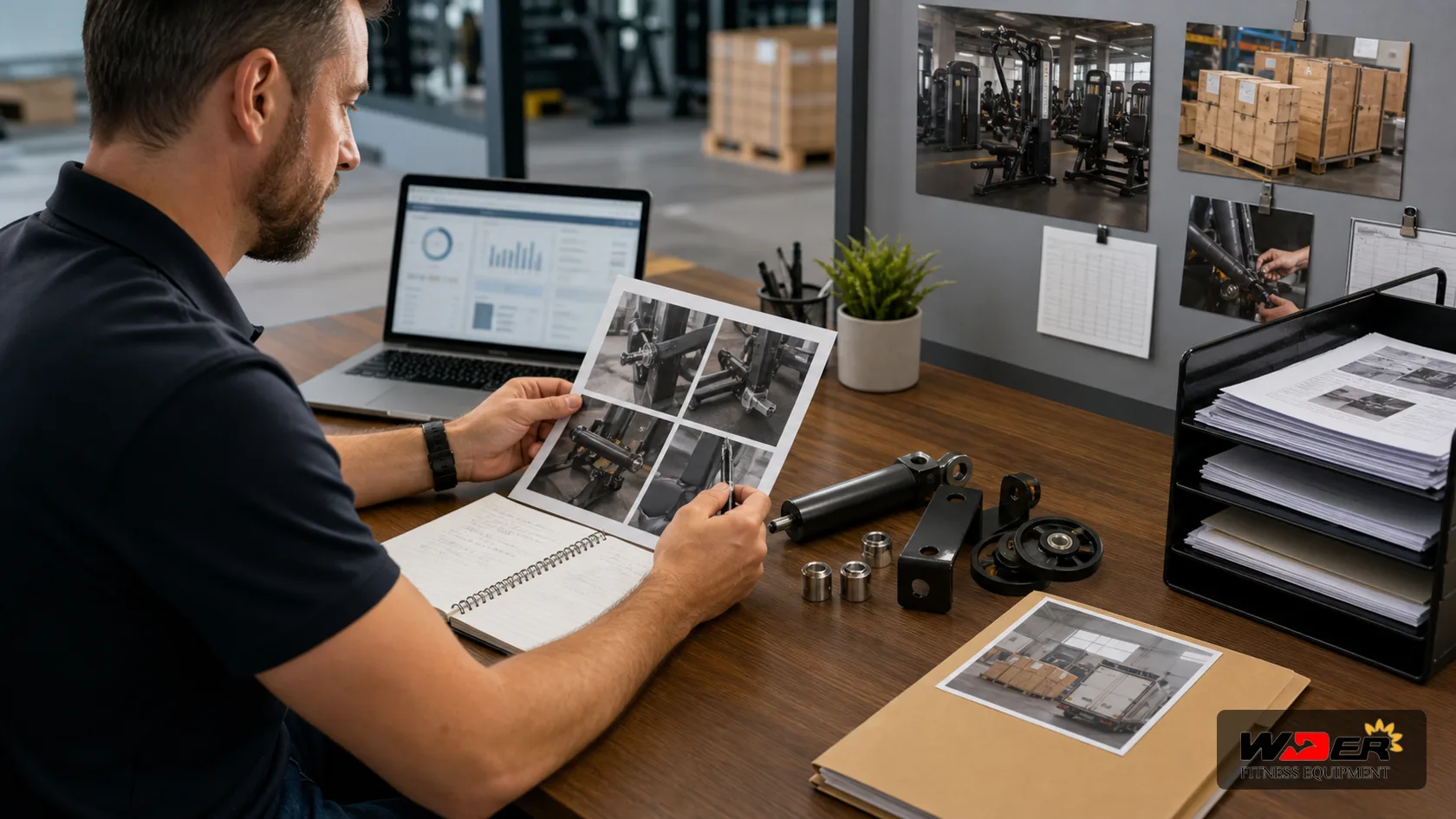
Commercial Gym Equipment Distributor After-Sales Workflow
A distributor after-sales workflow should record installed models, customer site, issue photos, serial or model information, service history, spare parts used and supplier response. Clear records help separate installation issues, wear parts, warranty claims and repeat-order improvements.
Read Guide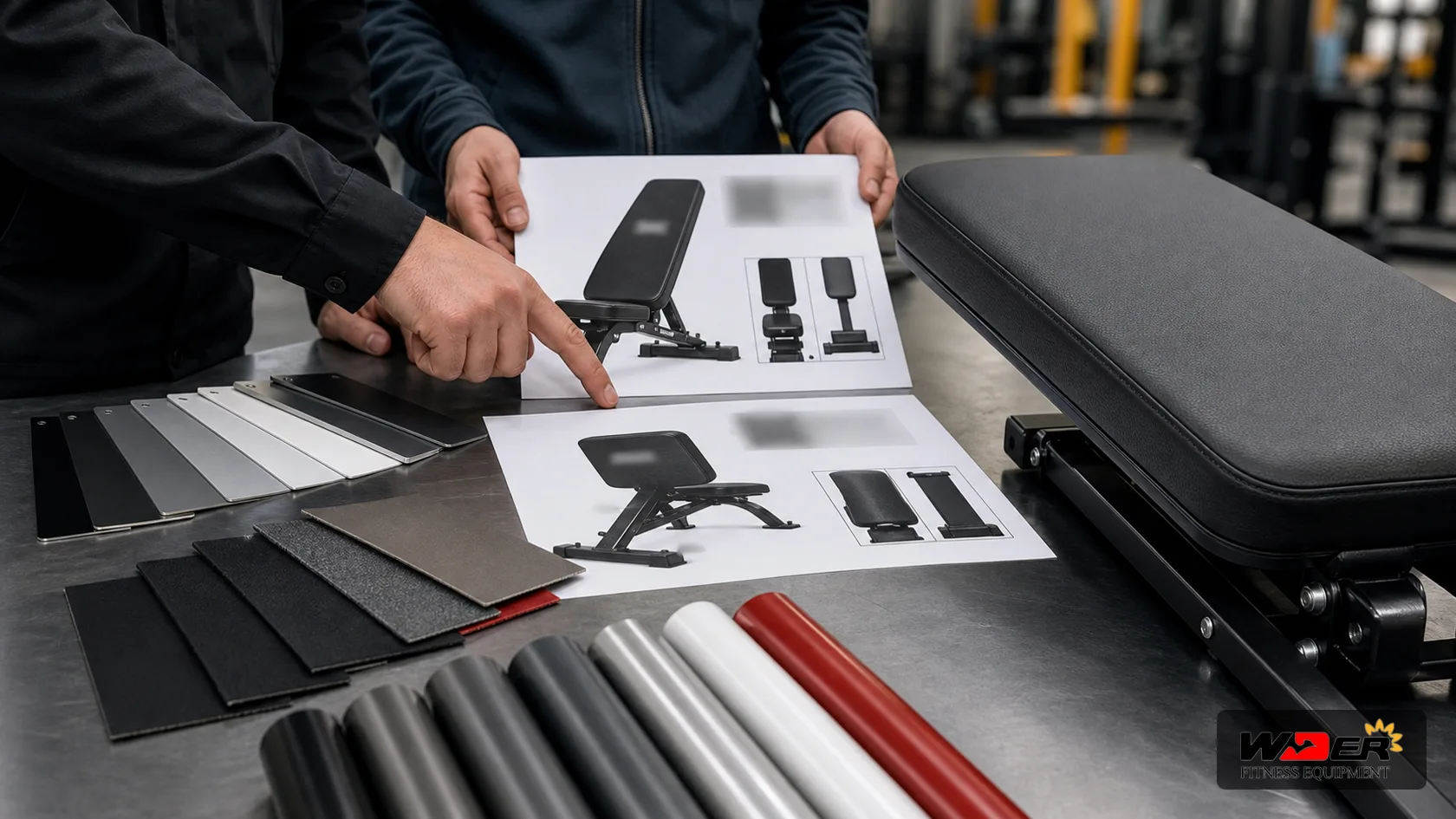
OEM Gym Equipment Logo, Color and Upholstery Approval Guide
OEM gym equipment buyers should approve logo artwork, logo position, frame color, upholstery color, stitching, label language, carton marks and sample photos before production. A written approval record helps the factory keep private-label details consistent across the whole order.
Read Guide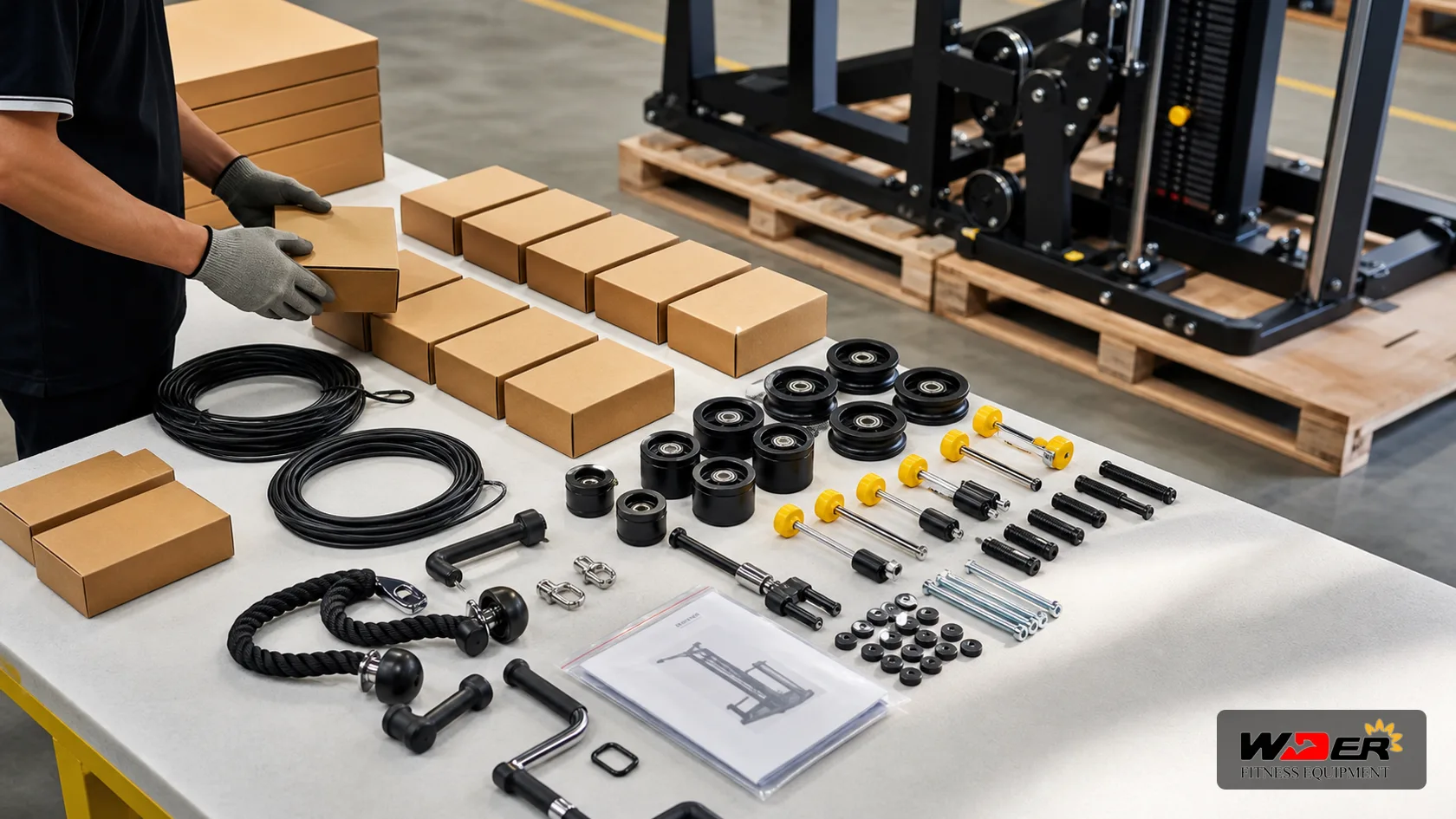
First Shipment Spare Parts Kit for Commercial Gym Equipment Buyers
A first shipment spare parts kit for commercial gym equipment should usually include cables, pulleys, selector pins, bolts, grips, end caps, adjustment knobs, upholstery references and model-specific small parts. The exact kit should match the equipment list and expected local service ability.
Read Guide
Selectorized Strength Machine Weight Stack Specification Guide
Selectorized strength machine specifications should confirm weight stack range, increment size, cable routing, pulley material, guide rod smoothness, selector pin fit, shroud design and maintenance access. These details affect user experience, service workload and spare parts planning.
Read Guide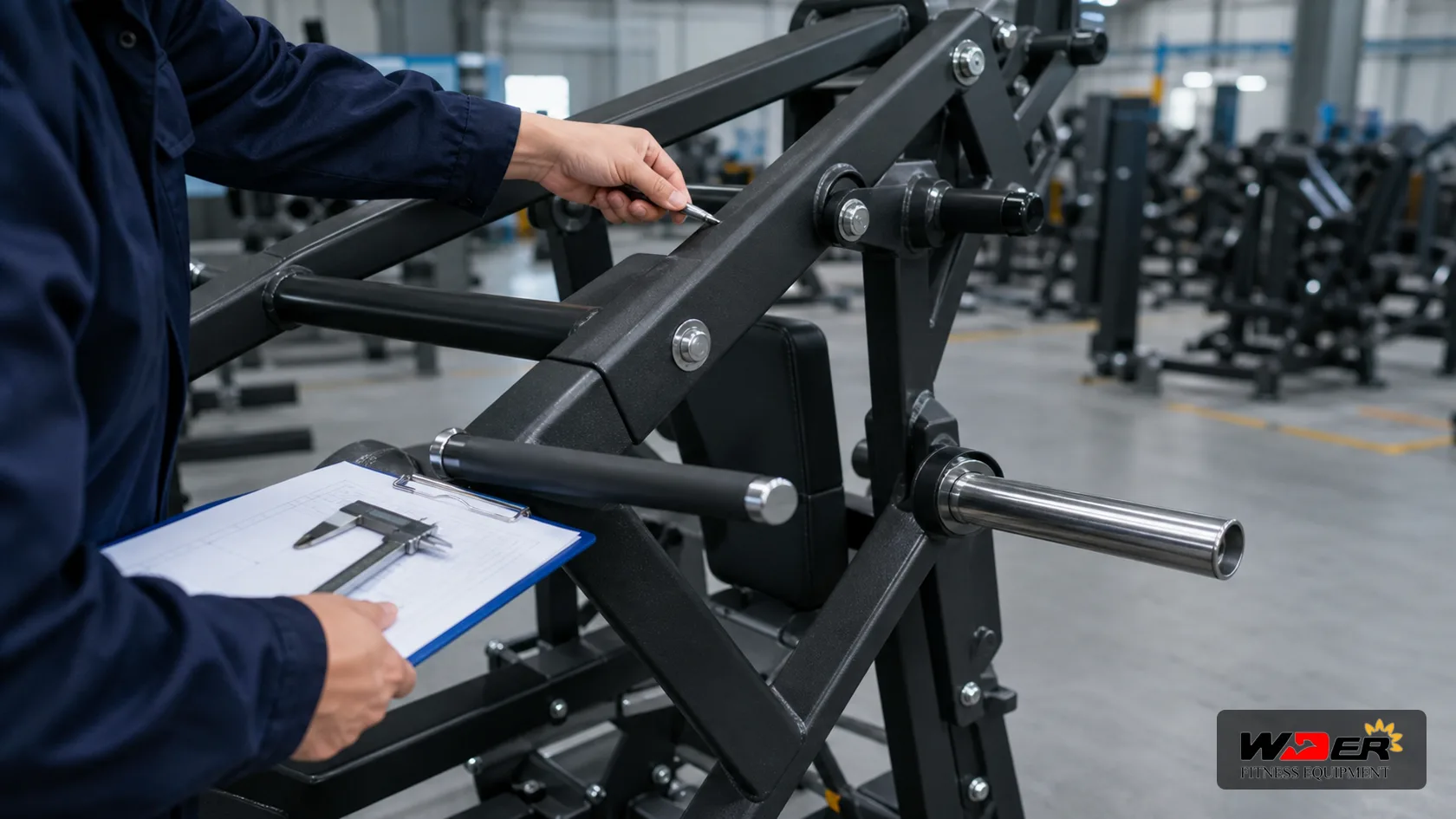
Plate Loaded Machine Biomechanics Questions to Ask a Supplier
Buyers should ask a plate loaded machine supplier about movement path, pivot position, starting position, handle angle, loading horn length, frame stability, user height range, pad adjustment and tested training feel. These questions help compare equipment beyond appearance and price.
Read Guide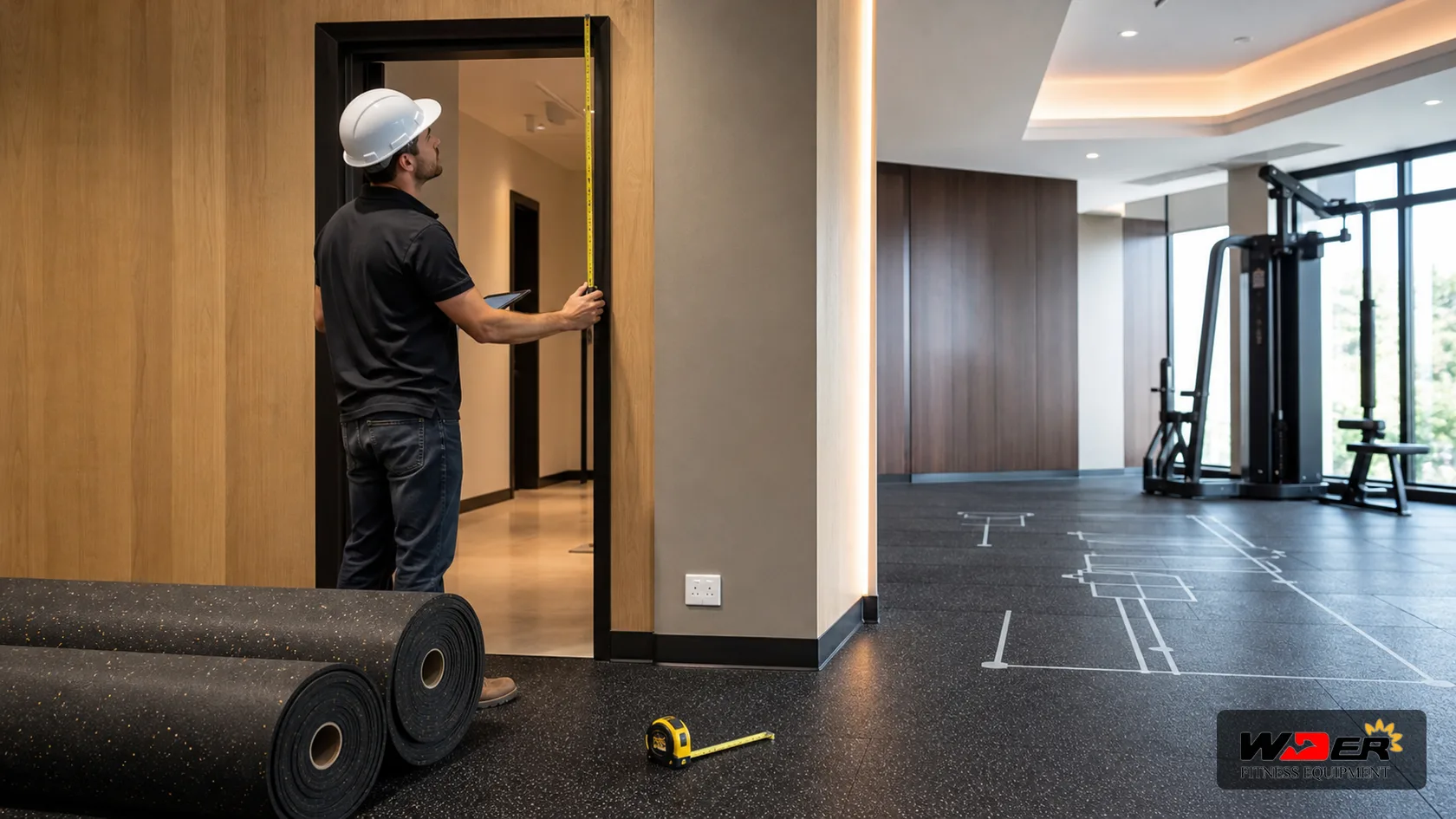
Commercial Gym Equipment Installation Site Readiness Checklist
A commercial gym equipment site is ready for installation when access routes, doorway width, elevator capacity, ceiling height, flooring, power supply, unloading space, storage area and layout marks are confirmed. Buyers should finish these checks before the container arrives to avoid delays and extra handling costs.
Read Guide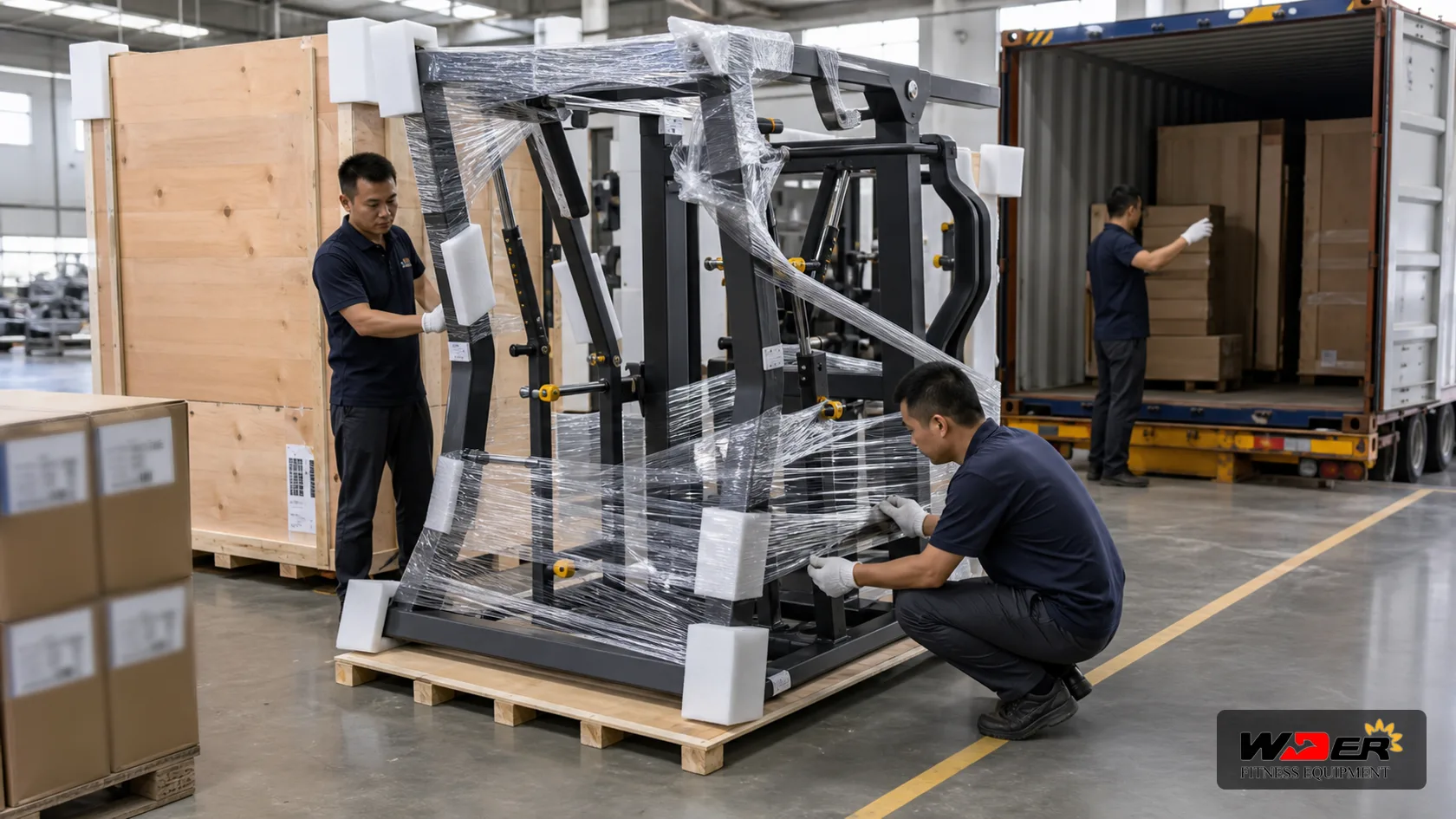
Commercial Gym Equipment Export Packing Damage Prevention Guide
Commercial gym equipment export packing should prevent scratches, pad compression, frame rubbing, missing accessories and loading movement. Buyers should confirm foam protection, stretch film, carton marks, accessory boxes, pallet or crate method, loading sequence and photo evidence before shipment.
Read GuideNeed a quotation, catalog or OEM product plan?
Send your target market, product categories and quantity. WDER will help prepare suitable model suggestions.
Contact WDER